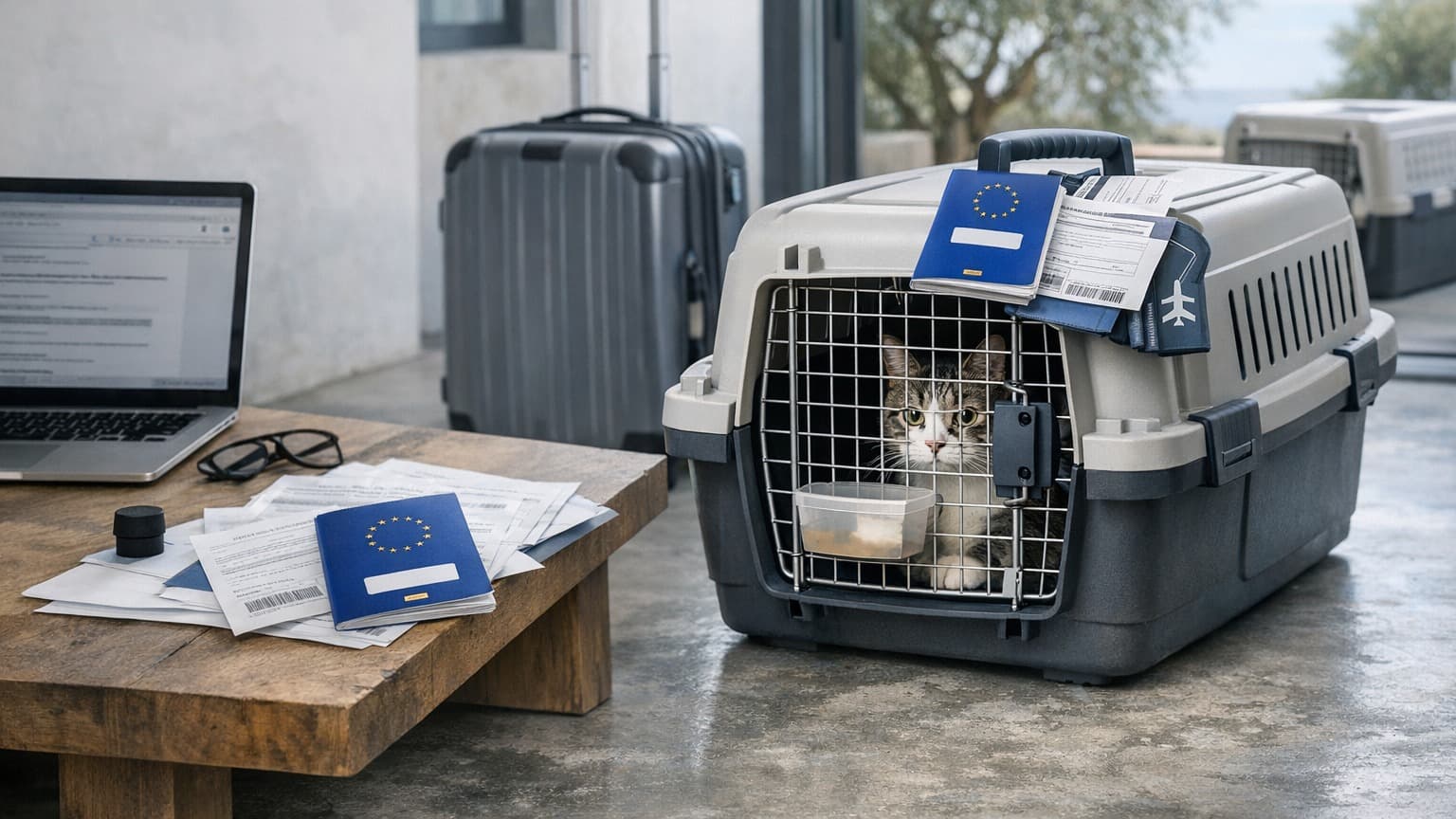
Adopting a rescue cat or dog from Cyprus and bringing them to another country is one of the most meaningful things you can do for an animal that would otherwise spend its life on the street. It is also more complicated, more expensive, and more time-consuming than most people expect.
This is not a deterrent. It is a preparation guide. The process is entirely manageable if you know what to expect. The problem is that most people do not know what to expect until they are already in the middle of it.
The EU Pet Passport
Cyprus is an EU member state, which means animals travelling to other EU countries can do so under the EU pet passport system. This is the single biggest administrative advantage of adopting from Cyprus rather than from a non-EU country.
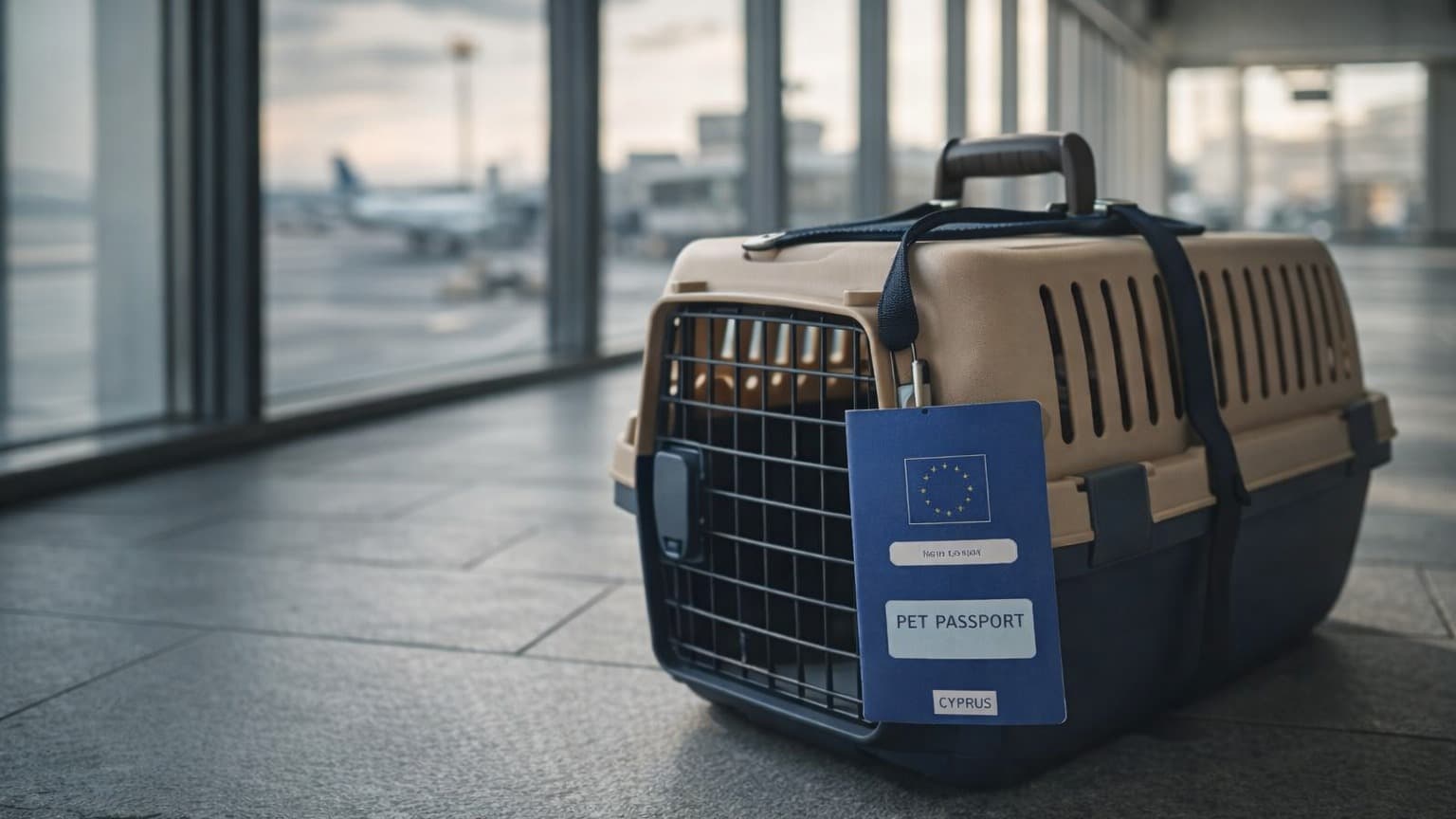
An EU pet passport requires the animal to be microchipped (ISO 11784/11785 compliant, 15-digit), vaccinated against rabies, and have the vaccination recorded in the passport by an authorised veterinarian. The passport itself is a standardised document recognised across all EU member states.
Cost of the passport, microchip, and initial rabies vaccination in Cyprus: approximately €30–€60, depending on the veterinarian.
For travel within the EU — Cyprus to Germany, France, the Netherlands, etc. — the pet passport is generally sufficient, provided the rabies vaccination was administered at least 21 days before travel. No quarantine. No titre test. No additional paperwork beyond the passport.
This simplicity applies to EU-to-EU travel. Travel to the UK, the US, and other non-EU destinations is a different matter entirely.
Travelling to the UK: Post-Brexit Complications
Since Brexit, the UK no longer accepts EU pet passports. Animals entering the UK from Cyprus now require an Animal Health Certificate (AHC), issued by an official veterinarian no more than 10 days before travel.
The requirements are: microchip, rabies vaccination administered at least 21 days before travel, and the AHC itself. No rabies titre test is required for entry from Cyprus, as Cyprus is classified as a Part 1 listed country. No quarantine is required.
However, the AHC must be issued by an Official Veterinarian (OV) — not just any private vet. In Cyprus, this typically means a visit to the government veterinary services, which can involve appointment delays and administrative lag. Budget one to two weeks for this step alone.
Cost of the AHC in Cyprus: approximately €20–€40. But the real cost is in time and logistics, not money.
The Rabies Titre Test: When and Why
For travel to certain countries — including Australia, Japan, Singapore, and some Middle Eastern states — a rabies antibody titre test is required. This is a blood test that proves the animal has a sufficient immune response to the rabies vaccine.
The titre test must be performed at least 30 days after vaccination, and the results must show an antibody level of at least 0.5 IU/ml. The blood sample must be analysed by an EU-approved laboratory for rabies antibody titration. In Cyprus, samples are typically sent to labs in France, Germany, or the UK.
Timeline: blood draw to results is typically three to four weeks, but can take six weeks during busy periods. Some destination countries then require a waiting period of three to six months after a successful titre test before the animal can travel.
Cost: approximately €80–€150 for the blood draw, lab analysis, and documentation.
If you are adopting a cat from Cyprus and bringing it to Australia, you are looking at a minimum timeline of six to eight months from the decision to adopt to the animal arriving at your door. Plan accordingly.
Airline Transport: Cabin, Cargo, or Courier
How the animal physically gets from Cyprus to its destination is often the most expensive part of the process. There are three options.
Cabin travel. Some airlines allow small cats and dogs in the cabin in an approved carrier that fits under the seat. Weight limits are typically 8 kg including the carrier. Not all airlines operating from Cyprus offer this option, and routes can be limited. Cost: approximately €50–€200 per flight, plus the cost of an airline-approved carrier (€30–€80).
Cargo (manifest cargo). The animal travels in the pressurised, temperature-controlled cargo hold. This is the standard option for larger animals or when cabin travel is not available. It requires an IATA-compliant crate, and the animal must be booked through the airline's cargo division, not through regular passenger booking. Cost: approximately €200–€500, depending on the airline, route, and animal size, plus the IATA crate (€50–€150).
Pet transport courier. Commercial pet transport companies handle the entire process — pickup from the rescue, veterinary paperwork, crate, flight booking, customs clearance, and delivery to the adopter. This is the most expensive option but the least stressful for adopters who cannot fly to Cyprus themselves. Cost: approximately €400–€1,200, depending on the destination and service level.
Quarantine Rules by Destination
Quarantine requirements vary dramatically by country. For the most common adoption destinations:
UK: No quarantine, provided all paperwork (AHC, microchip, rabies vaccination) is in order.
Germany, France, Netherlands, other EU: No quarantine with a valid EU pet passport.
United States: As of 2024, the US requires dogs to be microchipped with an ISO-compliant chip, at least six months old, and to arrive with specific CDC documentation. Cats face fewer restrictions but still require a health certificate. No quarantine for cats from Cyprus. Dog requirements have become significantly more complex — check current USDA/CDC rules before proceeding.
Australia: Mandatory 10–30 day quarantine upon arrival at an approved facility in Melbourne. Extensive pre-travel testing including titre test. Total timeline from start of process to animal arriving home: approximately 8–12 months. Total cost including quarantine: approximately €2,000–€4,000.
Japan: Quarantine of up to 180 days if pre-travel requirements are not met. With full compliance (titre test, waiting period, proper documentation), quarantine can be reduced to 12 hours. Total timeline: 8–10 months minimum.
The Real Cost Range
Putting it all together, here is what international adoption from Cyprus actually costs, beyond any adoption fee charged by the rescue organisation:
Cyprus to EU (e.g., Germany): €200–€600 total. Pet passport, vaccinations, flight (cabin or cargo), carrier/crate.
Cyprus to UK: €300–€800 total. AHC, vaccinations, flight, carrier/crate, potential courier service.
Cyprus to US: €500–€1,200 total. Health certificate, vaccinations, cargo flight or courier, CDC documentation.
Cyprus to Australia: €2,000–€4,000 total. Titre test, extended waiting period, cargo flight, mandatory quarantine, courier service.
These ranges do not include the adoption fee itself, which varies by rescue organisation from €0 (some rescues ask for nothing) to €150–€300 (which typically covers sterilisation, vaccinations, and microchipping already performed).
What Nobody Tells You
Timelines slip. Veterinary appointments get rescheduled. Lab results take longer than expected. Airlines change pet policies. Paperwork has errors that require resubmission. Build a buffer of at least two to four weeks beyond your planned timeline.
Not every vet knows the process. Some veterinarians in Cyprus are experienced with international pet travel documentation. Others are not. Ask your rescue organisation for a vet recommendation — they will know who handles the paperwork correctly.
Flight availability is seasonal. Many airlines restrict pet travel during summer months due to temperature embargoes (cargo holds can overheat). If you are planning a summer adoption, cabin travel or a pet courier with climate-controlled transport may be your only options.
The emotional timeline is longer than the logistical one. You will fall in love with the animal from photos and videos weeks or months before you can actually bring them home. This is normal. It is also stressful. Prepare for it.
Post-arrival adjustment takes time. A cat or dog that has lived outdoors in Cyprus will need time to adjust to indoor life, different weather, new sounds, and a new routine. Some animals settle within days. Others take weeks or months. Patience is not optional.
The process is real, the costs are real, and the complications are real. But so is the outcome: an animal that was living on the street, at risk of disease and starvation, is now in a home, safe, fed, and loved. That transaction — paperwork and all — is worth the effort.
Related posts
 ADOPTION
Adopting a Rescue Cat from Cyprus to the UK: Everything You Need to Know
A step-by-step guide to adopting a rescue animal from Cyprus to the United Kingdom. Timeline, costs, requirements, and what to expect — from applic…
7 min read
Read → ADOPTION
How international pet adoption works: from Cyprus to the UK
Paperwork, rabies titre tests, transport, and realistic timelines for bringing a rescue cat or dog from Cyprus into the United Kingdom.
2 min read
Read → ADOPTION
How to Adopt a Rescue Cat from Cyprus to the UK: The Complete 2026 Guide
Everything you need to know about bringing a rescue cat from Cyprus to the United Kingdom — requirements, costs, timeline, and how to do it.
9 min read
Read →