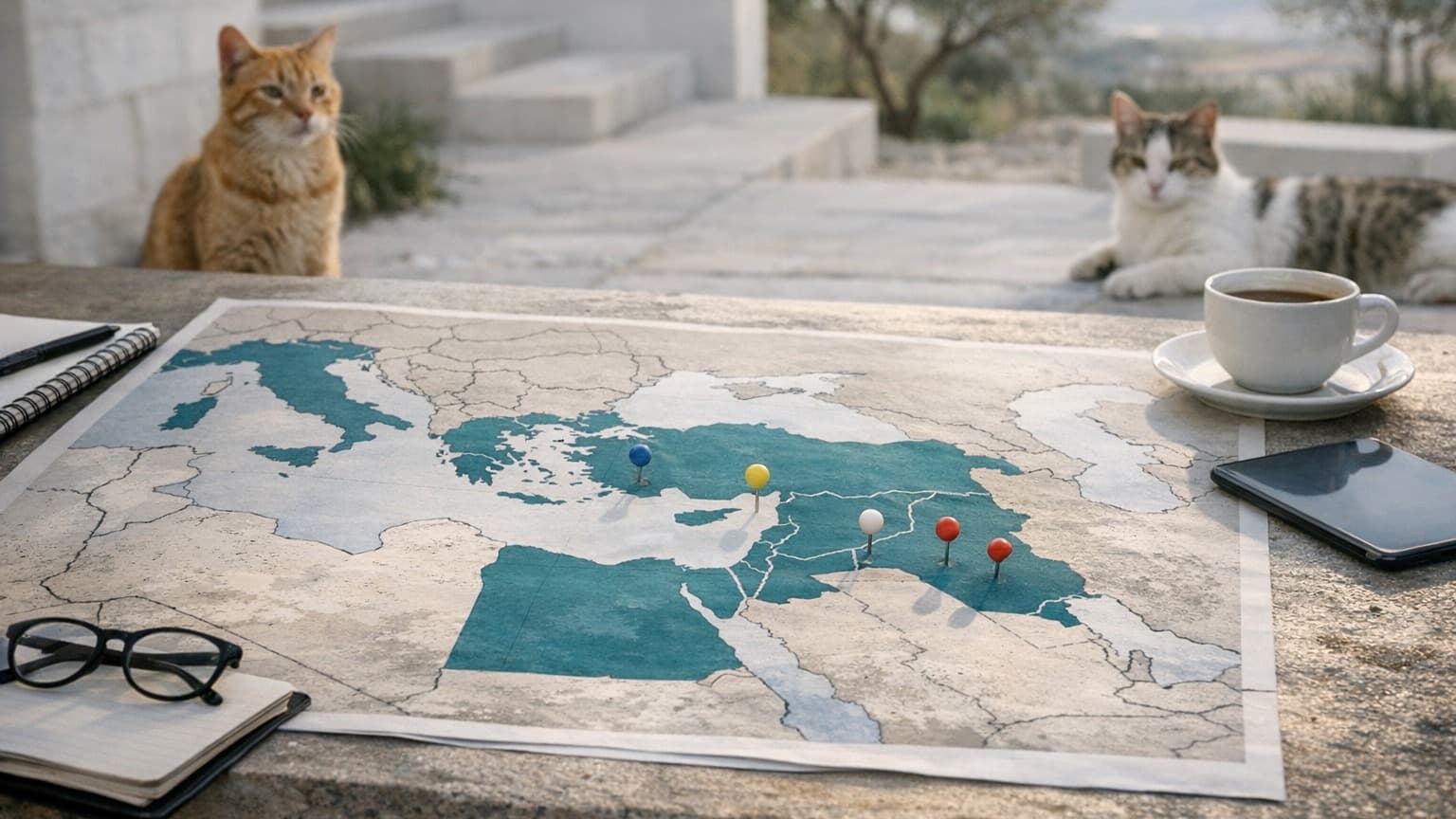
Rover operates in the United States, Canada, the United Kingdom, Germany, the Netherlands, Norway, Sweden, Denmark, Finland, Austria, Switzerland, France, Belgium, Italy, and Spain.
That is a list of the wealthiest, most infrastructure-dense, most digitally mature pet care markets in the world. It is also, not coincidentally, a list of the countries where the least help is needed.
This post is about everywhere else.
How Pet Care Infrastructure Actually Fails
The absence of a platform like Rover in a given country is not just a market opportunity in the conventional startup sense. It means pet owners relocating internationally cannot find vetted care for their animals. It means sitters who want to work professionally have no way to establish trust with strangers. It means rescue organizations and sanctuaries have no marketplace infrastructure to connect animals with adopters across borders.
It means, concretely, that people surrender animals they love because they had no other option.
Tinies was built to be the platform for those countries — not as a secondary market after the profitable ones are saturated, but as the primary mission from day one. Here is where we are going and why.
Greece
Greece has one of the most severe stray animal crises in Europe, similar to Cyprus. Estimates place the stray dog population alone at over one million. Urban pet ownership is growing rapidly, particularly among younger Greeks in Athens and Thessaloniki, but formal pet care infrastructure is almost entirely absent. There is no dominant local marketplace. There is no organized professional sitter network.
What Greece has is a culture that is beginning to change — from treating strays as a municipal nuisance to recognizing companion animals as part of the social fabric. A platform that enters this market with sanctuary-linked bookings and an international adoption pipeline is not just a marketplace. It is infrastructure for that transition.
Cyprus and Greece share regulatory proximity through EU membership, cultural familiarity, and geographic adjacency. Greece is Tinies' most natural first expansion market.
Turkey
Turkey's pet ownership growth rate is among the highest in the region. Istanbul alone has seen a dramatic increase in companion animal ownership over the past decade, driven by urbanization and demographic shifts among younger Turks. Formal pet care services — walking, sitting, boarding — exist but are fragmented, informal, and largely unvetted.
Turkey also has a significant stray animal population and a complex, evolving relationship with animal welfare policy. A platform with a welfare-linked revenue model and international adoption infrastructure has a role here that goes beyond commerce.
The market is large, the infrastructure gap is real, and the timing is right.
The UAE and Gulf States
Expat density in the UAE, Qatar, and Bahrain is among the highest in the world. Professionals relocate to these countries regularly, often with pets, and face an immediate problem: there is no trusted, organized infrastructure for pet care. The services that exist are informal, expensive, and difficult to vet.
English-language platforms with international standards and transparent review systems are not just convenient here — they are necessary. The Gulf expat community is also highly connected and highly mobile, which means a trusted platform can spread through word of mouth faster than almost any other market.
Tinies' international adoption infrastructure is particularly relevant here, where families often need to rehome animals when assignments end and international transport is either too complex or too costly.
Portugal and Spain
The digital nomad corridor that runs through Lisbon, Porto, Barcelona, and Valencia is one of the most pet-dense expat populations in the world. Remote workers relocate here with dogs and cats, stay for months or years, and need exactly what Tinies offers: vetted local sitters, home visits, boarding, and the infrastructure to handle pet care across uncertain timelines.
Rover operates in Spain. It does not operate with the mission alignment, the welfare-linked revenue model, or the international adoption infrastructure that the expat community here specifically needs. There is room for a platform that serves this population as a primary market, not an afterthought.
Lebanon, Jordan, and the Displacement Markets
This is harder to talk about commercially, but it is the most important category.
Conflict displacement does not just uproot people. It abandons animals. Families fleeing Lebanon, Syria, and Gaza have faced impossible choices about pets that most Western pet owners have never had to consider. The infrastructure for emergency pet rehoming, cross-border adoption, and crisis-context animal welfare coordination is essentially nonexistent in formal marketplace terms.
Tinies' adoption platform was built with this in mind — not as a marketing feature, but as a structural capability. Cross-border adoption pipelines, sanctuary partnerships, and international coordination infrastructure are not nice-to-haves in these markets. They are the entire point.
We will not pretend a marketplace solves a humanitarian crisis. But infrastructure that moves animals across borders safely, connects sanctuaries with adopters internationally, and funds welfare organizations through normal transaction volume — that is a meaningful contribution to a problem that nobody else in the pet services space is treating seriously.
The United States
The US market is the largest pet services market in the world. It is also already served by Rover, Wag, Fetch, and a growing list of regional competitors.
Tinies will enter the US market. The differentiation there is not geographic — it is structural. A welfare-linked revenue model, sitter protections designed from the ground up rather than retrofitted, and an international adoption infrastructure that no US-native platform has built are the basis for competing in a crowded market on terms that the incumbents cannot easily replicate.
The US launch comes after the markets where Tinies is most needed and least competed for. That sequencing is intentional.
The Actual Map
The countries Rover serves are not the countries that need Tinies most. The markets with the largest infrastructure gaps, the fastest-growing pet ownership rates, and the most acute animal welfare needs are in Southern Europe, the Middle East, and the Gulf — exactly the region where Tinies is already operating.
We are not trying to beat Rover in London or Seattle. We are building the platform for Athens, Istanbul, Dubai, Lisbon, and Beirut — and then bringing what we learned there back to the US.
The map of countries Rover forgot is not a gap in their strategy. It is the foundation of ours.
Tinies is a pet services marketplace and international animal adoption platform. A majority of platform revenue funds animal sanctuaries in Cyprus and beyond. Explore pet care services or list your services on Tinies today.
Related posts
 PET CARE
We Are Not Trying to Get Rich. We Are Trying to Take Care of Animals.
This is the post that every startup founder is advised not to write. The conventional wisdom is that you do not talk about money in terms of what …
6 min read
Read → PET CARE
Why We'd Rather Have Investors Who Actually Like Dogs
In 2021, Rover went public via SPAC at a valuation of $1.35 billion. In 2023, Blackstone — the private equity firm with $1 trillion in assets under…
6 min read
Read → ADOPTION
War Doesn't Just Displace People. It Abandons Animals.
When a family flees, the question of what to do with the dog is not a small one.
5 min read
Read →