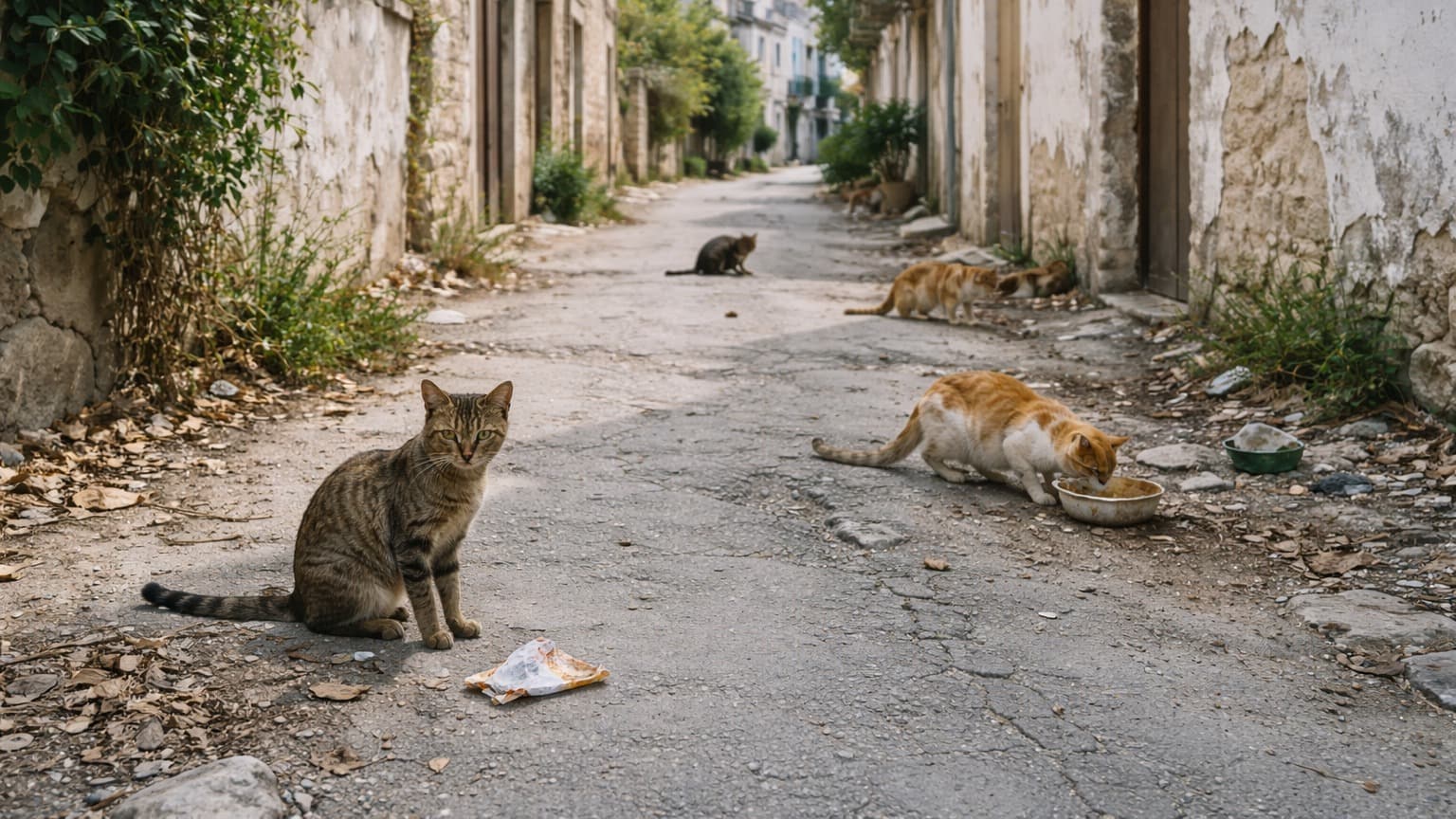
There is a comforting myth about stray cats: that they are resilient, independent, and fundamentally fine on their own. That nature will sort it out. That the cats will find food, find shelter, and reach some kind of natural equilibrium.
This is not what happens. What happens, when no one intervenes, is slower and uglier than most people want to think about.
The First Phase: Overcrowding
An unmanaged colony grows quickly. A single breeding pair can produce dozens of descendants within two years. Without sterilisation, the population in a given area can double in 12 to 18 months under favourable conditions — and Cyprus's year-round warmth provides exactly those conditions.
At first, a growing colony is merely visible. More cats at the feeding station. More kittens appearing in spring. More toms spraying territory markers. Residents may notice and comment, or they may not. The cats are, at this stage, mostly healthy. Food sources — whether from intentional feeding, restaurant waste, or scavenging — are sufficient to support the current population.
But carrying capacity is not infinite. As the colony grows, competition for food, shelter, and territory intensifies. This is where the problems begin.
Disease Amplification
Dense populations accelerate disease transmission. In a Cypriot stray cat colony, three categories of disease cause the most damage.
Feline panleukopenia (also called feline parvovirus) is highly contagious, environmentally persistent, and has a mortality rate of 50–90% in unvaccinated cats, with kittens being the most vulnerable. The virus can survive in soil and on surfaces for months. In a dense colony, a single infected cat can trigger an outbreak that kills dozens of kittens within weeks. Learn more about feline panleukopenia prevention and management.
Upper respiratory infections — feline herpesvirus and calicivirus — are endemic in virtually every unmanaged colony. They spread through sneezing, shared food, and direct contact. In healthy adult cats, these infections are unpleasant but survivable. In kittens, immunocompromised cats, or animals already weakened by malnutrition, they can be fatal. Chronic respiratory infection also makes cats less able to compete for food, creating a downward spiral.
FIV and FeLV operate on a longer timeline but are no less destructive. FIV, spread through bite wounds during fights, gradually destroys the immune system over months or years. FeLV, spread through saliva and close contact, causes cancers, anaemia, and immune suppression. In a large, dense colony with many unneutered males fighting regularly, infection rates climb steadily. Studies of Cypriot stray populations have consistently found prevalence rates above European averages.
The cumulative effect is a population that is not just large but increasingly sick. Cats with compromised immune systems are more susceptible to secondary infections, parasites, and environmental stress. Veterinary care is unavailable. Natural resistance only goes so far.
Starvation and Malnutrition
A growing colony eventually outstrips its food supply. Restaurant waste, tourist scraps, and informal feeding stations cannot scale indefinitely. When food becomes scarce, the consequences are predictable.
Kittens are the first to suffer. Malnourished mothers produce less milk. Weaned kittens competing with adults for limited food lose consistently. Kitten mortality in unsupported colonies can exceed 75% before six months of age.
Adults lose body condition. A chronically underfed cat is more vulnerable to disease, less able to defend territory, and more likely to range further in search of food — which increases road traffic accidents and conflict with humans.
Starvation in a cat colony is not typically sudden. It is a slow grind. Cats do not drop dead in large numbers on a single day. They thin out gradually. They develop visible rib cages. They lose fur condition. They become lethargic. They stop grooming. They die in hidden places — under bushes, behind walls, in drainage culverts — where their deaths are invisible to the humans who walk past every day.
Colony Collapse
When disease and starvation reach critical levels, a colony does not simply shrink in an orderly way. It collapses. The breeding population crashes. Surviving cats disperse, carrying diseases and parasites to new areas and potentially seeding new colonies that will repeat the cycle.
Colony collapse is not a solution. It is a catastrophe that merely looks like a solution because there are temporarily fewer visible cats. The underlying conditions — lack of sterilisation, lack of veterinary care, lack of sustained management — remain unchanged. Within one to two breeding cycles, the population rebounds.
This boom-and-bust pattern is well documented in unmanaged feral cat populations worldwide. It is the biological default when human intervention is absent.
Environmental Impact
Cats are obligate carnivores and effective predators. In Cyprus, the environmental impact of 1.5 million outdoor cats on native wildlife is substantial, though frequently overlooked in discussions that focus solely on the welfare of the cats themselves.
Cyprus is a critical stopover point for migratory birds travelling between Europe and Africa. The island's position in the Eastern Mediterranean makes it an important resting and refuelling site during spring and autumn migration. An uncontrolled cat population exerts significant predation pressure on ground-nesting birds, reptiles, and small mammals.
The endemic Cyprus wheatear, the Cyprus warbler, and several species of gecko and snake are all subject to cat predation. While cats are not the only threat these species face — habitat loss and climate change are also significant factors — predation by an artificially inflated domestic predator population is an added pressure that native species did not evolve to withstand. See the work of BirdLife Cyprus documenting these conservation concerns.
This creates an uncomfortable tension between animal welfare advocates, who focus on the cats, and conservation biologists, who focus on the broader ecosystem. Both are right. The cats are suffering, and the wildlife is suffering. The common cause of both forms of suffering is the same: human failure to manage the situation. Learn more about effective trap-neuter-return strategies.
Public Health Risks
Unmanaged cat colonies pose public health risks that extend beyond the cats themselves. Toxoplasmosis, caused by the parasite Toxoplasma gondii, is shed in cat faeces and can persist in soil for months. While toxoplasmosis is typically mild in healthy adults, it poses serious risks to pregnant women and immunocompromised individuals.
Rabies is currently absent from Cyprus, but the island's proximity to regions where rabies is endemic — and the difficulty of vaccinating a large, unmanaged stray population — means that the risk is not zero. A single introduction event, via an illegally imported animal or a stowaway on a cargo ship, could spread rapidly through an unvaccinated population.
Parasites — fleas, ticks, roundworms, hookworms — are endemic in stray colonies and can transfer to domestic pets and, in some cases, to humans. Flea-borne diseases and zoonotic parasites are a particular concern in areas where children play in close proximity to cat colonies.
Accumulated cat faeces in public spaces, playgrounds, and agricultural land is both a nuisance and a genuine sanitation concern. Municipalities that fail to manage stray populations are effectively externalising a public health cost onto residents.
The Cost of Doing Nothing
Inaction is not cost-free. It is simply a cost that is distributed differently — borne by the cats in suffering, by wildlife in population decline, by volunteers in exhaustion and personal expense, by public health systems in preventable disease, and by communities in degraded living conditions.
The argument for intervention is not sentimental. It is practical. Managed colonies — sterilised, vaccinated, fed, and monitored — are healthier, smaller, and less ecologically damaging than unmanaged ones. The cost of systematic TNR and colony management is a fraction of the cost of the problems that unmanaged populations create.
But the cost of doing nothing is easy to ignore, because it accrues slowly, invisibly, and to populations — feline and avian and reptilian — that do not vote, do not file complaints, and do not write letters to the municipal council.
Related posts
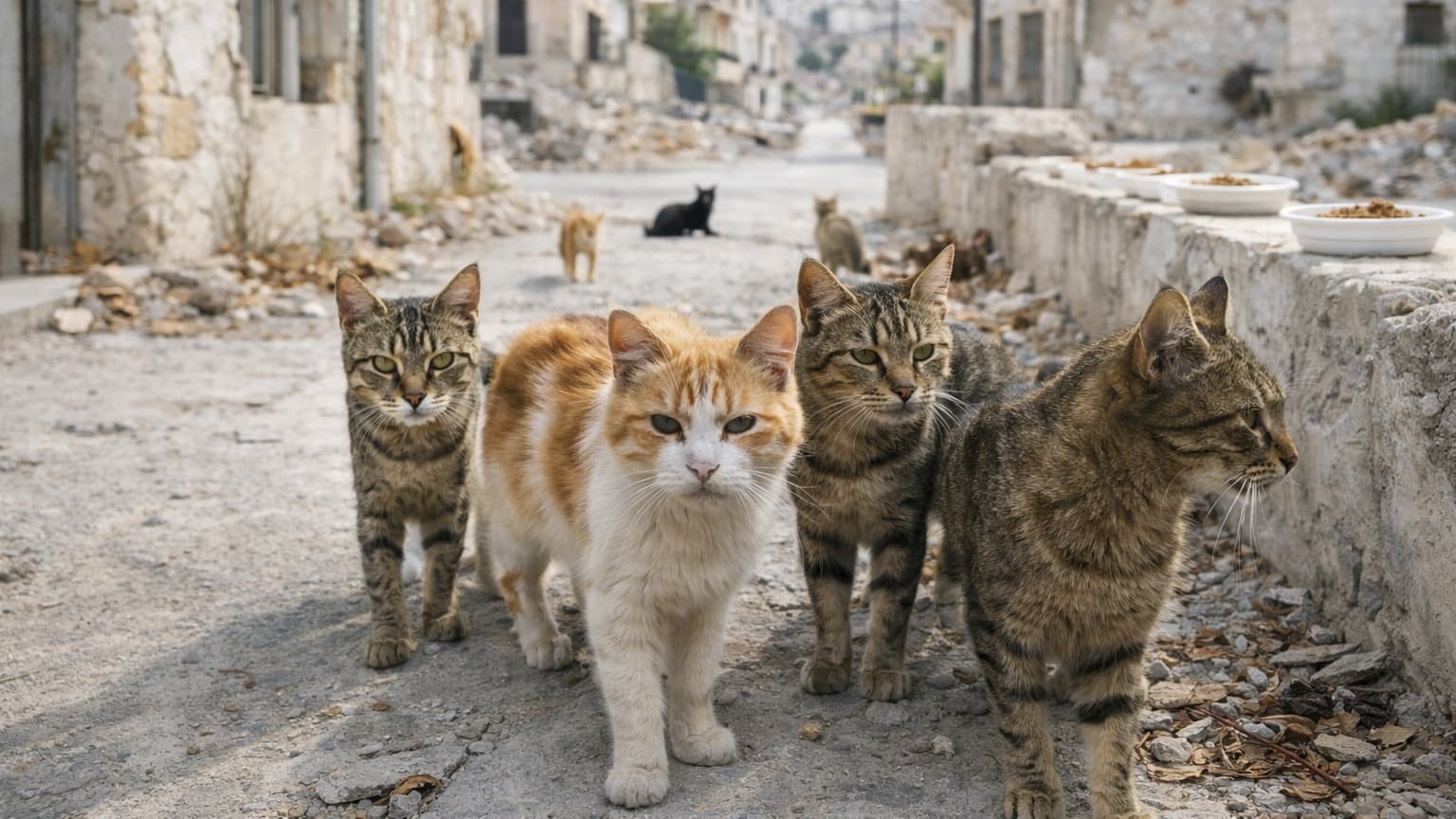 CYPRUS CAT CRISIS
Why Cyprus Has 1.5 Million Stray Cats — And Why the Problem Keeps Getting Worse
Colonial-era feeding traditions, failed sterilisation campaigns, infectious disease, and municipal indifference have created Europe's worst stray c…
7 min read
Read →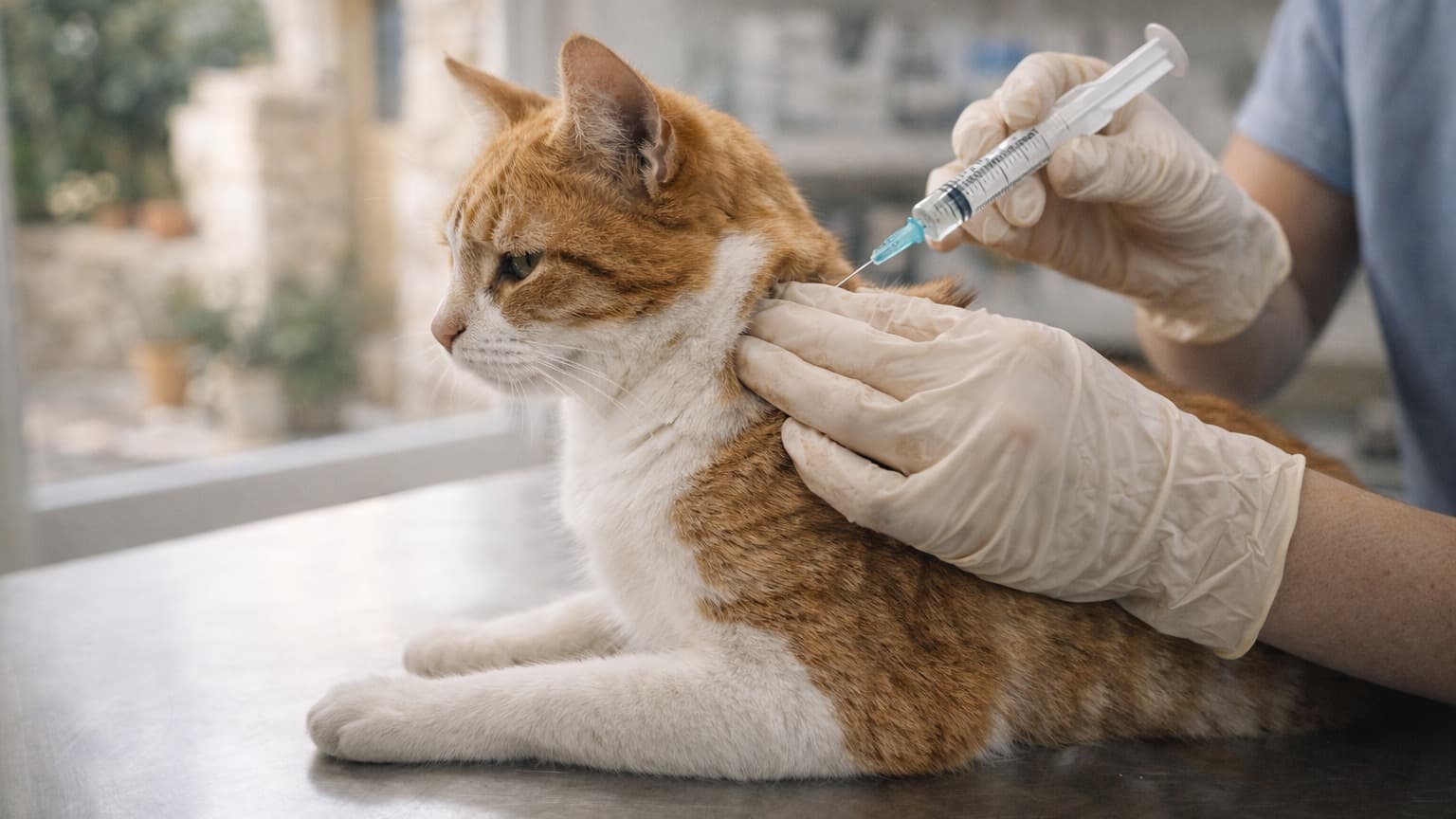 SOLUTIONS
The Single Injection That Could End the Cyprus Cat Crisis — And Why No One Is Talking About It
A gene therapy contraceptive developed by Harvard and the Cincinnati Zoo permanently sterilizes female cats with one injection. No surgery. No anes…
6 min read
Read →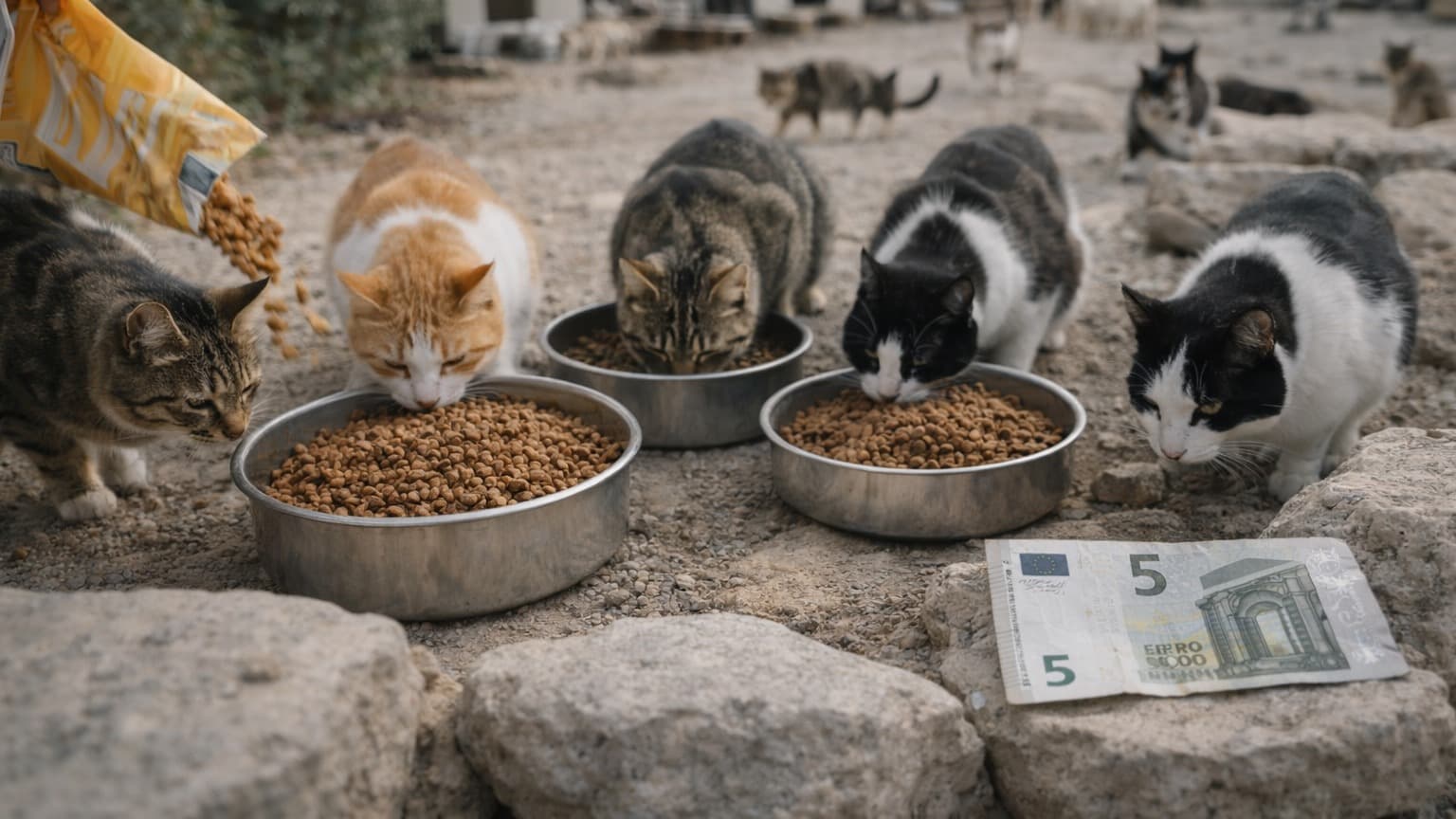 IMPACT
How €5 Feeds 14 Cats: The Real Economics of Stray Cat Care
A breakdown of what it actually costs to feed, sterilise, and care for stray cats in Cyprus — and why small donations have outsized impact.
7 min read
Read →