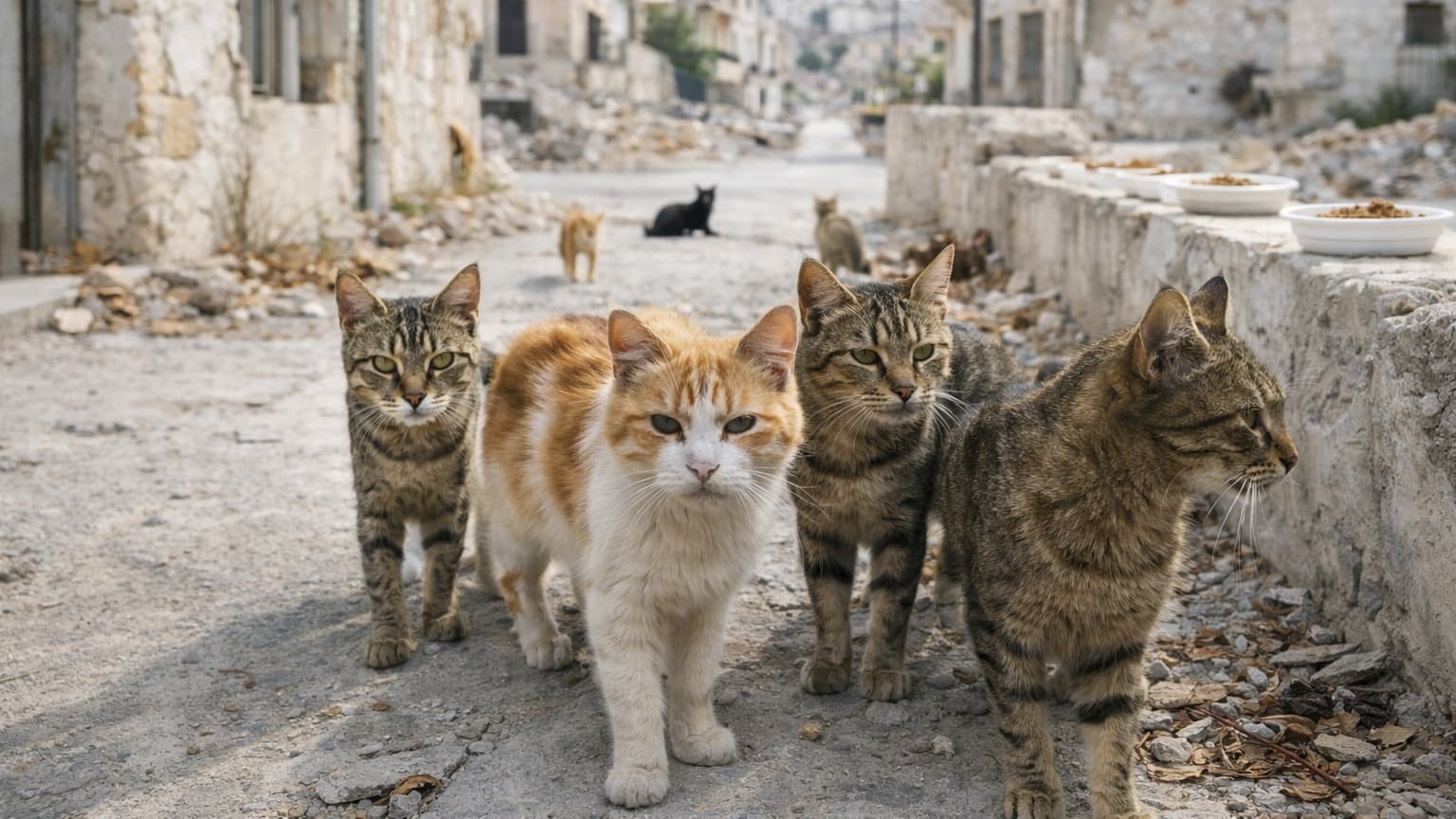
The figure most commonly cited by veterinary bodies and animal welfare organisations is 1.5 million. Some estimates run lower. Some run higher. None of them are comforting. Cyprus, an island with roughly 1.2 million permanent residents, is home to more stray cats than people.
That ratio is not a quirky cultural detail. It is the result of decades of compounding policy failure, cultural inertia, and biological reality. Understanding how it happened is the first step toward understanding why it is so difficult to fix.
The Colonial Roots of a Feeding Culture
Cyprus has lived with outdoor cats for millennia. The earliest archaeological evidence of cat domestication anywhere in the world was found at Shillourokambos, a Neolithic settlement in southern Cyprus, dating to approximately 7500 BCE. Cats and this island have history.
But the modern stray cat situation has more specific origins. During British colonial rule (1878–1960), cats were actively encouraged in villages and military installations as pest control. Grain stores, barracks, and port warehouses all relied on resident cat populations to manage rodents. Feeding these cats was not sentimental — it was practical. Communities developed the habit of putting out scraps, and cats became a permanent fixture of outdoor life.
When independence came in 1960, the administrative infrastructure that might have managed animal populations — veterinary services, registration systems, municipal animal control — was either weak or nonexistent. The cats remained. The feeding continued. But the management never materialised.
The Reproductive Math
An unspayed female cat can produce two to three litters per year, with an average of four to six kittens per litter. If even half of those kittens survive to reproductive age — and in Cyprus's mild climate, survival rates are higher than in colder countries — a single unspayed female can be responsible for dozens of descendants within two years.
Scale that across hundreds of thousands of unspayed females, and the arithmetic becomes overwhelming. Even aggressive sterilisation campaigns struggle to keep pace, because the threshold for population stabilisation through trap-neuter-return (TNR) is approximately 70–75% of the breeding population. Fall below that line, and the remaining fertile cats reproduce fast enough to replace every animal you sterilised.
Cyprus has never come close to that threshold on a national level.
TNR: Good Theory, Poor Execution
Trap-neuter-return is the internationally recognised gold standard for humane stray cat population management. The principle is simple: trap feral and stray cats, sterilise them, and return them to their territory. Over time, the colony stabilises and gradually shrinks through natural attrition. Learn more about best practices and TNR resources from Alley Cat Allies.
In practice, TNR in Cyprus has been patchy, underfunded, and inconsistent. Government-sponsored sterilisation programmes have existed, but they tend to operate in short bursts — a funded campaign for six months here, a municipal initiative for a year there — before money runs out or political priorities shift.
The most consistent TNR work on the island is done by volunteer organisations and individual rescuers, often paying for surgeries out of their own pockets or through small-donor fundraising. These efforts are heroic but structurally inadequate. A volunteer who sterilises 200 cats in a year is making a real difference in her immediate area. But across an island with an estimated 1.5 million strays, 200 is a rounding error.
The fundamental problem is coverage. TNR works when it is systematic, sustained, and covers a sufficient percentage of the population. In Cyprus, it is none of these things at scale.
FIV, FeLV, and the Disease Problem
Dense, unmanaged cat populations are breeding grounds for infectious disease. Two viruses are of particular concern in Cyprus: Feline Immunodeficiency Virus (FIV) and Feline Leukaemia Virus (FeLV).
FIV spreads primarily through bite wounds, which are common in unneutered male cats fighting over territory and mates. Prevalence studies in Cypriot stray populations have found FIV rates significantly higher than the European average. FeLV, which spreads through saliva, nasal secretions, and shared food bowls, thrives in exactly the kind of communal feeding situations that are ubiquitous across the island.
Both viruses are immunosuppressive. Infected cats become more vulnerable to secondary infections, respiratory disease, and cancers. They also become more expensive to treat, which places additional strain on already overstretched rescue organisations. A cat with FIV can live for years with proper care, but "proper care" is a luxury that most strays in Cyprus never receive.
The disease burden also complicates adoption. Responsible rescues test for FIV and FeLV before rehoming, and positive results can make cats harder to place, particularly for international adoption where receiving countries may have their own concerns about importing infected animals.
Municipal Underfunding
Cyprus is divided into six districts, each with its own municipal structure. Animal welfare is, in theory, a municipal responsibility. In practice, the budgets allocated to stray animal management are negligible.
A 2023 investigation by local media found that several municipalities were spending less than €10,000 per year on stray animal management — a figure that would barely cover the sterilisation costs for a single medium-sized colony. Some municipalities had no dedicated budget line for animal welfare at all.
The result is predictable. Municipalities outsource the problem to volunteers, who absorb the costs personally. When colonies grow too large or complaints from residents mount, the response is often reactive — rounding up visible strays and depositing them at the nearest shelter, which is likely already at capacity. There is rarely a systematic plan, rarely a sustained budget, and almost never any follow-up.
EU Inaction
Cyprus is a member of the European Union, and the EU has frameworks for animal welfare. But stray animal management falls largely outside the scope of EU regulation. The EU's main animal welfare legislation focuses on farmed animals, animals used in research, and animals during transport. Companion animals, and particularly stray companion animals, occupy a regulatory grey zone.
The European Parliament has passed non-binding resolutions calling on member states to address stray animal populations humanely. Various MEPs have raised the Cyprus situation specifically. But resolutions without enforcement mechanisms are suggestions, not solutions. There is no EU directive requiring member states to implement TNR. There is no EU funding stream dedicated to stray animal sterilisation. There is no mechanism to compel Cyprus — or any other member state — to spend more on animal welfare.
The result is that Cyprus can acknowledge the problem, express concern about the problem, and continue doing very little about the problem, all without running afoul of any EU obligation.
Why It Keeps Getting Worse
The stray cat population in Cyprus is not stable. It is growing. Every year, the gap between the number of cats born and the number sterilised, adopted, or dying of natural causes widens slightly. The volunteers who hold the line are aging, burning out, and running out of money. The municipalities are not stepping in to replace them. The national government treats it as a local issue. The EU treats it as a national issue.
Meanwhile, the cats keep breeding. The colonies keep expanding. The diseases keep spreading. The feeding stations keep running out of food. And the volunteers keep waking up at 5 a.m. to fill them anyway, because if they do not, nobody will.
The problem is not mysterious. The biology is well understood. The solutions are known. The obstacle is the same one it has always been: political will and sustained funding. Until those materialise, the number will keep climbing, and the island will keep adding cats faster than anyone can help them. For concrete solutions to this crisis, see The Cyprus Cat Crisis Tourism Industry, The Cyprus Cat Crisis Will Never Be Solved Without Fixing the Bins, and Eradicate by District.
Related posts
 CYPRUS CAT CRISIS
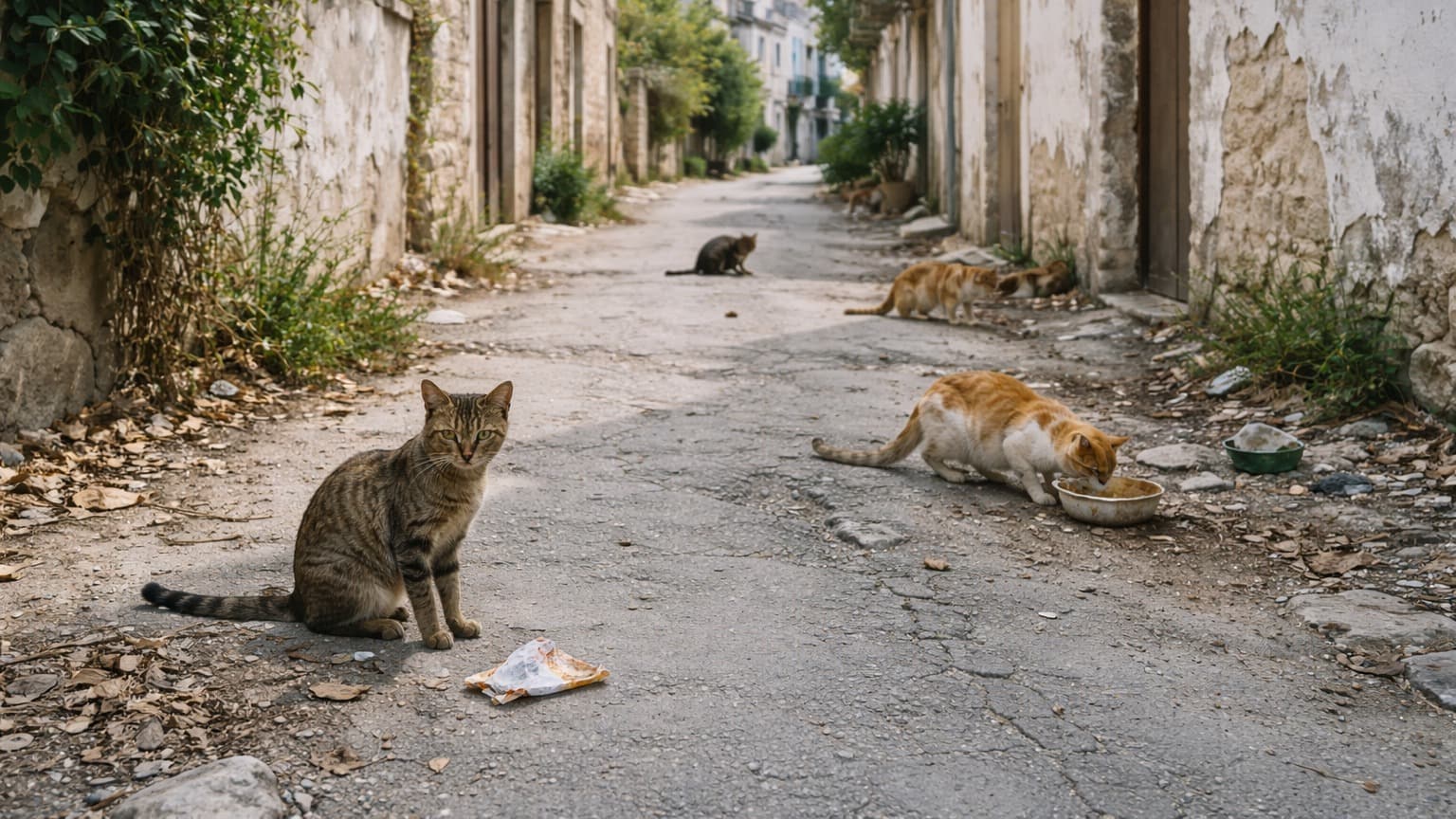
What Happens to Stray Cats in Cyprus When No One Intervenes
Without active management, stray cat colonies do not simply persist. They collapse — through disease, starvation, and ecological damage that extend…
7 min read
Read →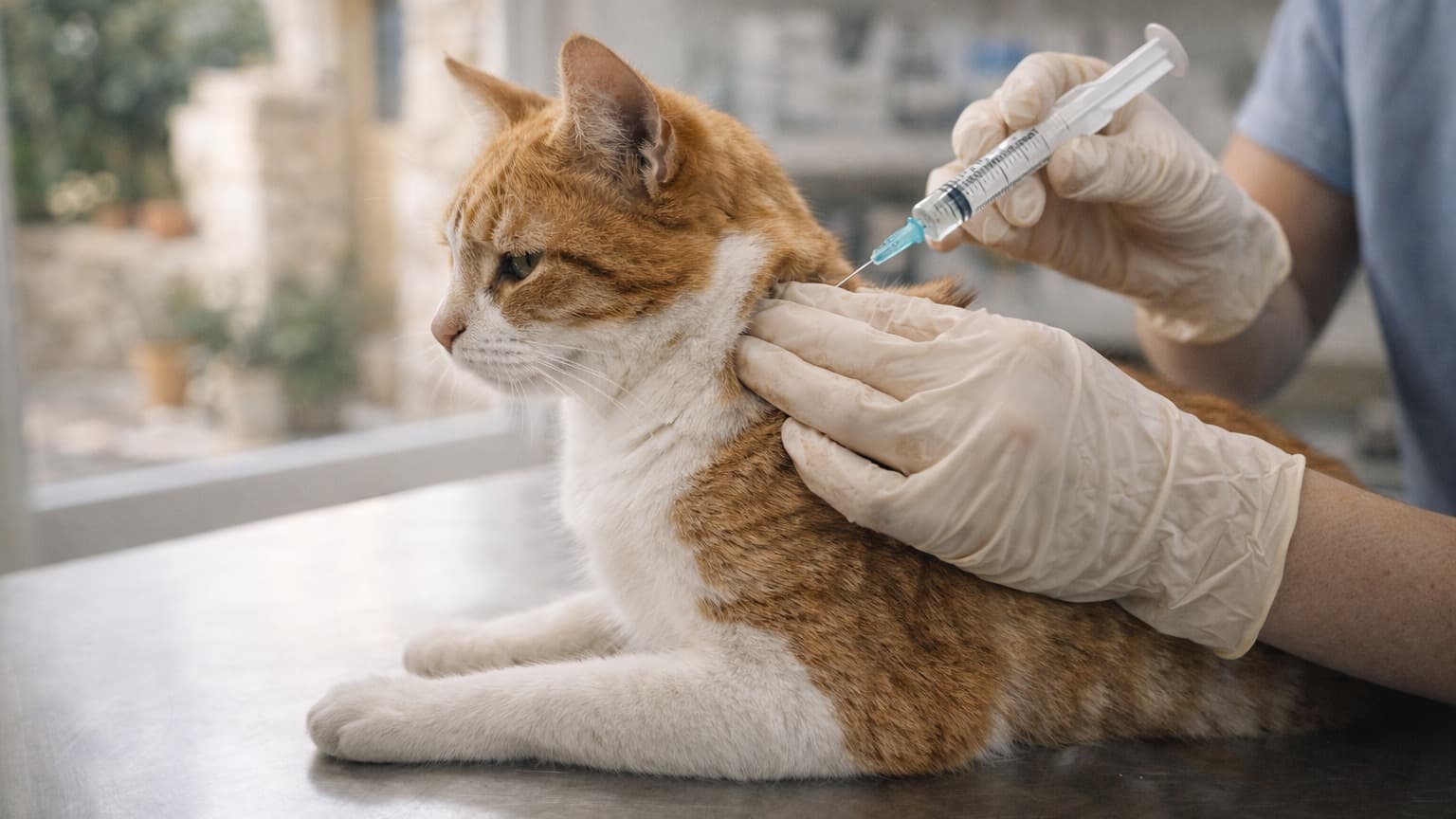 SOLUTIONS
The Single Injection That Could End the Cyprus Cat Crisis — And Why No One Is Talking About It
A gene therapy contraceptive developed by Harvard and the Cincinnati Zoo permanently sterilizes female cats with one injection. No surgery. No anes…
6 min read
Read →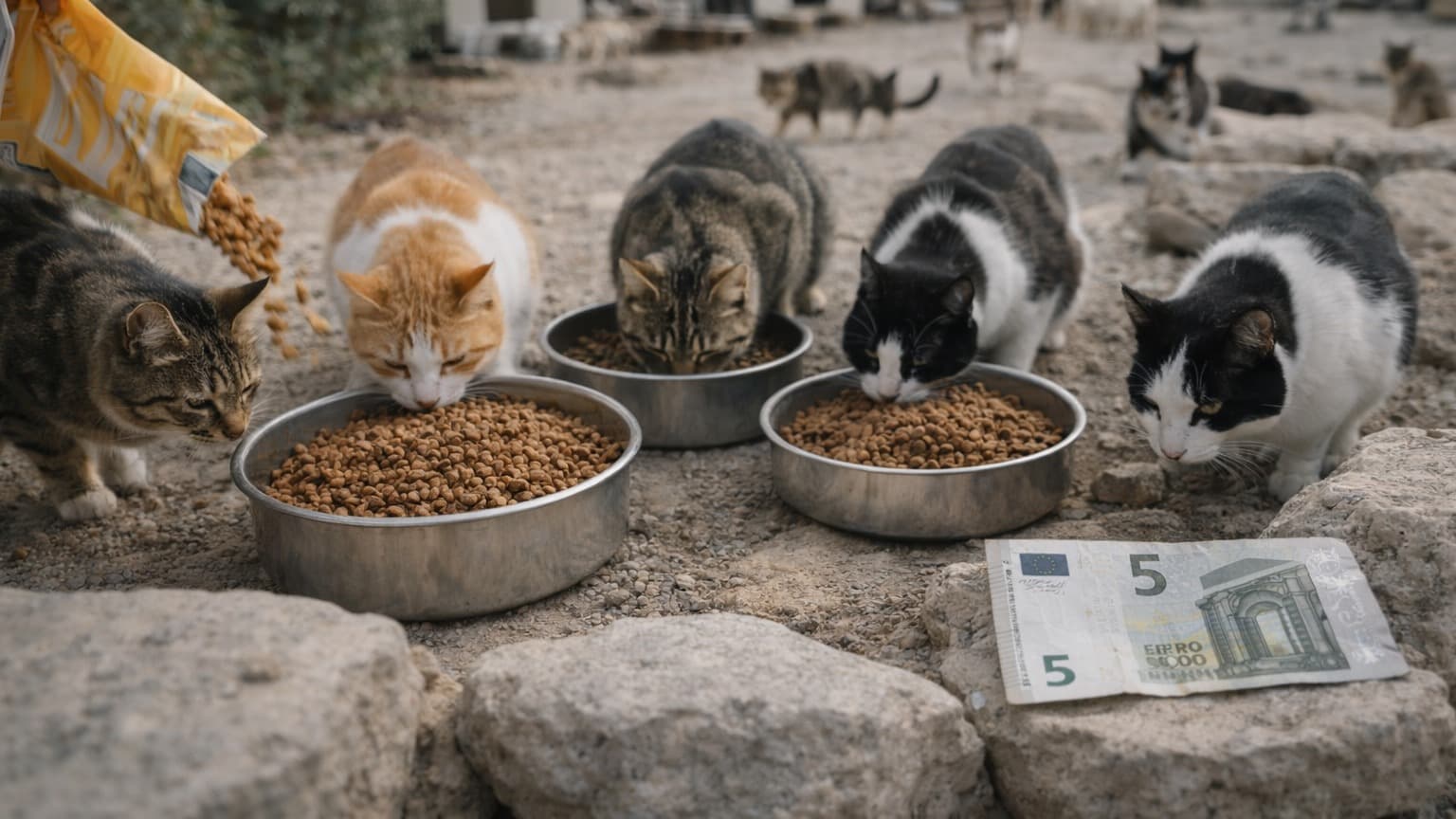 IMPACT
How €5 Feeds 14 Cats: The Real Economics of Stray Cat Care
A breakdown of what it actually costs to feed, sterilise, and care for stray cats in Cyprus — and why small donations have outsized impact.
7 min read
Read →