
A few years ago I had an idea I could not let go of. A franchise model for boutique hotels where each property housed and cared for rescued animals, and a defined percentage of revenue — not profit, revenue — went directly to the sanctuary operation. The hotel's identity was built around the animals. The animals' welfare was guaranteed by the hotel's commercial performance. Neither could succeed without the other.
I called it Cause Hotel. I bought the domain. I worked through the numbers. I pitched it.
Y Combinator passed.
What they said
Their concern was reasonable. The model didn't scale the way software scales. A franchise hotel operation is capital-intensive, operationally complex, and highly dependent on execution quality that is difficult to maintain across multiple locations. The unit economics of hospitality are less forgiving than the unit economics of a marketplace or a SaaS product. They were not wrong about any of this.
What I have thought about since is whether "it doesn't scale like software" is the same as "it doesn't work." Those are different statements. Most things that matter in the world don't scale like software. That does not make them bad ideas.
What I built instead
I built Tinies — a pet services marketplace where the booking commission funds animal sanctuaries directly. Approximately 90% of every commission goes to rescue operations, starting with Gardens of St. Gertrude, the sanctuary I founded in Parekklisia, Cyprus, which currently cares for 92 cats.
Tinies is, in structural terms, the same architecture as Cause Hotel applied to a different format. The commercial transaction funds the mission. The mission gives the commercial layer its identity and its reason to exist. The revenue commitment is structural, not discretionary. The mission is not a marketing layer. It is load-bearing.
The difference is that a marketplace is software, and software does scale the way YC understands. So Tinies was fundable in a way that Cause Hotel was not — at least not through that channel, at that moment.
Why I still think Cause Hotel was right
The problem this series has been examining is not solvable by a marketplace alone. Tinies can generate revenue that funds sanctuaries. It cannot provide the sanctuaries themselves — the physical infrastructure, the enclosed land, the safe environment that keeps 92 cats protected from traffic and hostile neighbors and the hundred other threats that face a stray animal in Cyprus.
That problem requires property. And property requires a different kind of business model than a marketplace.
What I would build differently now is not the concept but the structure. Rather than a top-down franchise requiring significant upfront capital and centralized control, the more resilient version is a certification and network model. Properties that meet defined standards — for animal welfare commitments, revenue transparency, sanctuary integration, and independent verification — earn a Cause Hotel designation. The network provides identity, marketing reach, and community. The individual properties retain their autonomy and their character.
This is closer to what the Paleo Foundation does for food certification — standards that mean something, built on criteria that are independently auditable, applied across a network of producers who benefit from the shared identity. Applied to hospitality, it is a different category. But the logic is the same: certification creates trust, trust creates preference, preference creates commercial value, commercial value funds the mission.
What the timing looks like now
The "business model as the mission" framing has become considerably more mainstream since that YC conversation. Impact investing has matured. Consumers have become more sophisticated about what mission-aligned actually means versus what it is claimed to mean. The demand for hospitality experiences that are genuinely connected to something — not just aesthetically rustic but structurally purposeful — is growing faster than the supply.
Cyprus has the raw material: distressed rural properties, an ancient relationship with cats, a tourism sector that has not yet figured out what its differentiating identity is, and a community of animal welfare operators who are currently running on sacrifice rather than structure.
The Cause Hotel domain is still registered. The idea has not gone away. I think it was early rather than wrong — and I think the window for building it is now more open than it has ever been.
If you are running a rural property in Cyprus, or thinking about acquiring one, or have capital you want to put toward something that works rather than something that performs: I would genuinely like to talk.
Next in this series: The 90% model — how to structure any business so that animal welfare is the point, not the afterthought.
Tinies is a pet services marketplace built to fund animal sanctuaries across Cyprus. Gardens of St. Gertrude is the sanctuary it was built to sustain.
Related posts
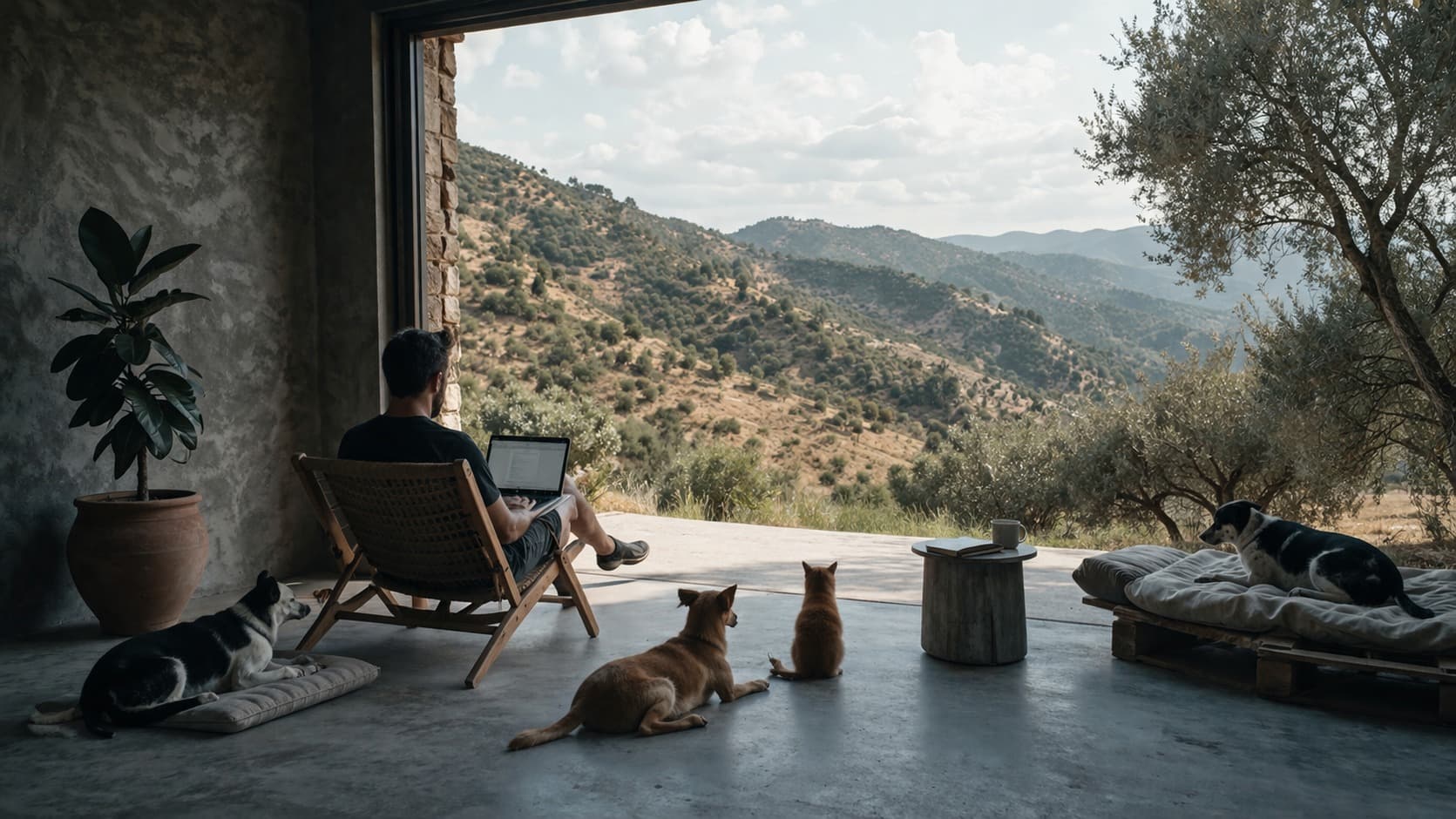 SOLUTIONS
What If We're Thinking About This the Wrong Way?
The sanctuary funding model is broken. Not because people don't care — but because caring was never meant to be a business plan.
7 min read
Read →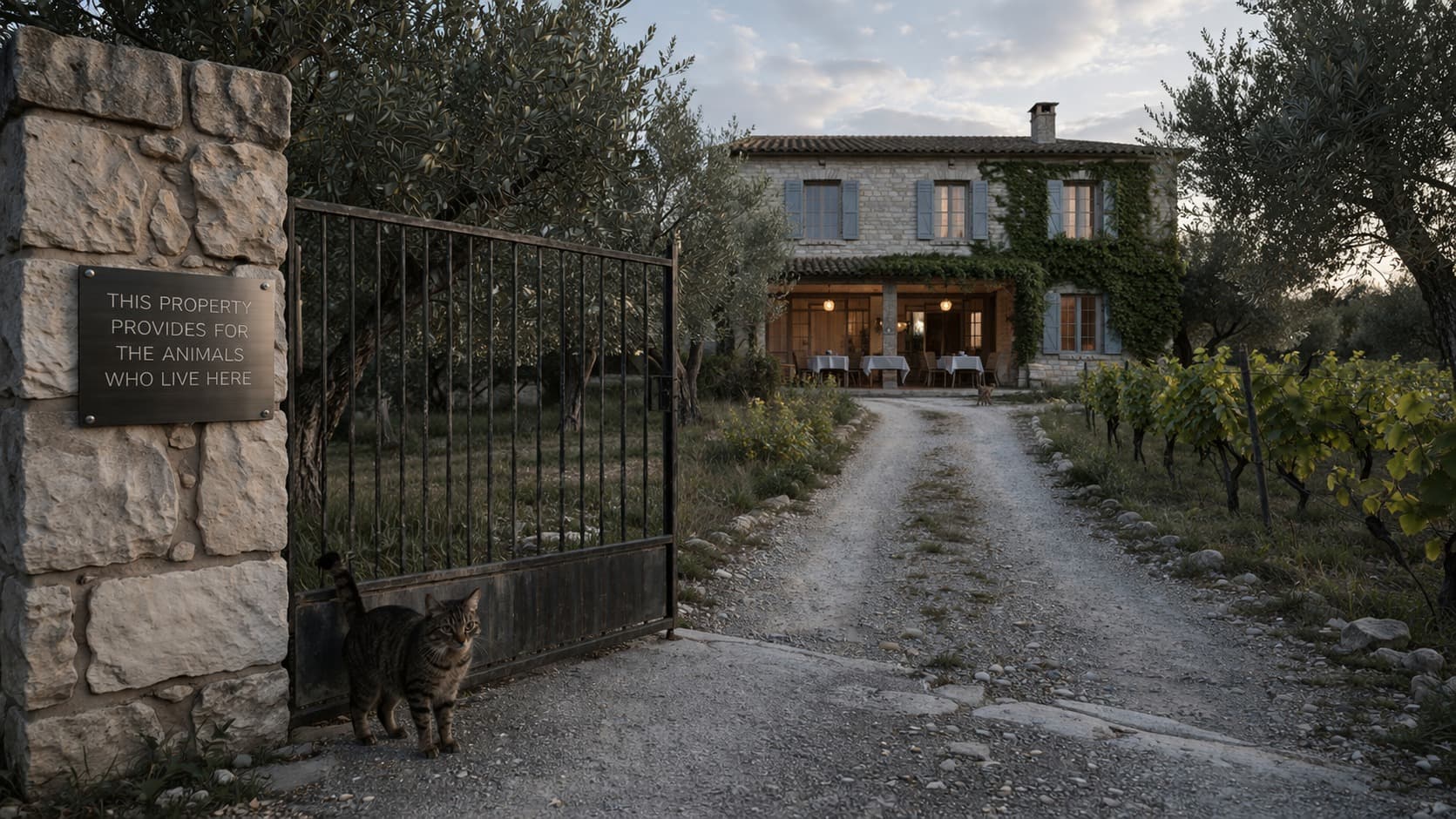 SOLUTIONS
What If the Land Paid for Itself?
Some properties are structurally protective of cats. Some generate income. A small number do both. Here is what to look for — and why Cyprus has mo…
5 min read
Read →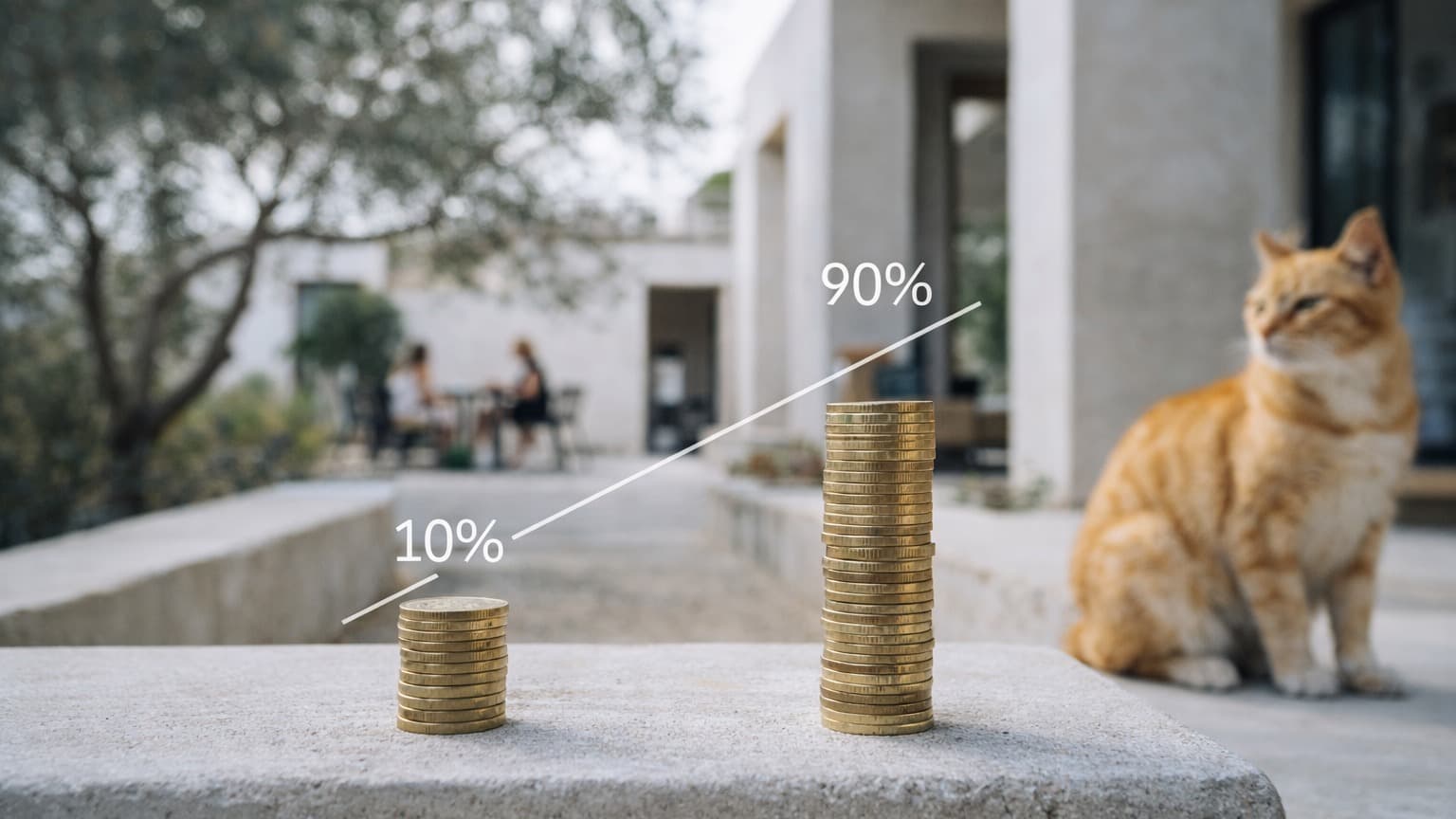 SOLUTIONS
The 90% Model: How to Structure a Business Where the Animals Are the Point
The mission is not funded by the business. The mission is what the business is for. Here is what that looks like in practice — and how to build it …
6 min read
Read →