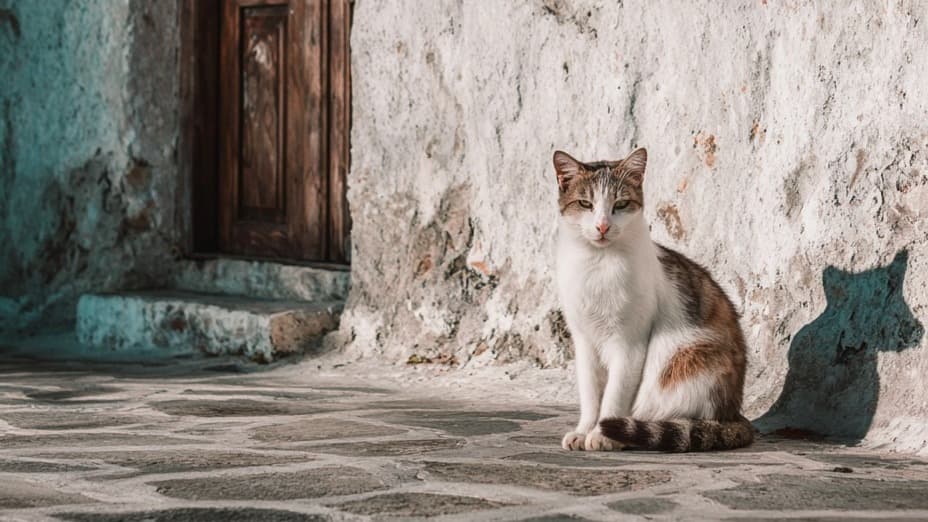
Cyprus has an estimated 1.5 million stray and feral cats. The island's human population is approximately 1.2 million. By any measure, this is a national-scale animal welfare issue.
So what does the government actually do about it?
The short answer: far less than the scale of the problem requires. The longer answer involves fragmented responsibility, thin budgets, and a gap that volunteer organisations have been filling with their own money for years.
Who is responsible?
Animal welfare in Cyprus falls under the jurisdiction of the Ministry of Agriculture, Rural Development and Environment, specifically the Department of Veterinary Services. At the municipal level, district veterinary officers handle stray animal management within their jurisdictions.
The legal framework is provided by the Protection and Welfare of Animals Law (N.46(I)/1994, as amended), which covers cruelty prevention, registration requirements, and basic welfare standards. The law was updated in recent years to introduce mandatory microchipping for dogs and stricter penalties for abuse and abandonment.
In theory, municipalities are responsible for managing stray populations in their districts. In practice, the resources allocated to this task vary enormously — and are generally insufficient.
What the municipalities do
Municipal stray management in Cyprus typically involves a small team of animal control officers who respond to complaints about stray animals, manage municipal shelters (where they exist), and occasionally coordinate with volunteer organisations for trap-neuter-return (TNR) programs.
The reality on the ground is that most municipalities treat stray management as a reactive rather than proactive function. Animals are collected when complaints are made. Municipal shelters, where they exist, operate at or over capacity. Systematic TNR programs — which are the only evidence-based method for reducing stray populations — are underfunded or nonexistent at the municipal level.
Limassol, the largest city, has invested more than most in animal welfare infrastructure, including a municipal shelter and some TNR coordination. Nicosia has similar facilities but capacity constraints. Smaller municipalities in Paphos, Larnaca, and Famagusta districts have even less.
The exact budgets are difficult to pin down because animal welfare spending is often buried within broader environmental or public health budget lines. Freedom of information requests to individual municipalities have produced inconsistent results — some municipalities can provide specific animal welfare budget figures, others cannot.
What is clear is that the total public spending on stray animal management in Cyprus is a fraction of what would be needed to address the problem systematically.
The TNR math
To reduce a stray cat population through TNR, approximately seventy to eighty percent of the population needs to be sterilised. Below that threshold, the remaining unsterilised cats breed fast enough to maintain or increase the population.
With an estimated 1.5 million stray cats in Cyprus, seventy percent sterilisation coverage means sterilising approximately 1.05 million cats. At a veterinary cost of EUR 50-80 per sterilisation (including trapping and transport), that represents a total cost of EUR 52.5 million to EUR 84 million.
This is not a number that volunteer organisations can reach. It is a national infrastructure project — comparable in scale to road maintenance or waste management. It requires systematic government funding, professional veterinary teams, and logistical coordination across every district.
The current approach — where rescue volunteers pay for sterilisations from personal savings and Facebook donations — is heroic but structurally inadequate.
What the rescue organisations actually do
In the absence of government-scale intervention, the real work falls to approximately forty to sixty registered rescue organisations across Cyprus. These organisations operate TNR programs, foster orphaned kittens, coordinate international adoptions, and provide veterinary care for injured and sick strays.
Most of them are run by one to five people. Most are funded entirely by donations, fundraisers, and the personal savings of the organisers. None receive meaningful government grants.
Gardens of St Gertrude, a cat sanctuary in Parekklisia, has seen its founders invest over EUR 460,000 in rescue operations since 2017 — not only for the ninety-two cats in their own care, but paying veterinary bills for other rescue organisations across the island who needed help covering emergencies.
Patch of Heaven Animal Haven in Limassol cares for over one hundred cats and dogs, running on continuous fundraising and the tireless work of its founder.
These are not unusual stories. They are representative of how animal rescue works in Cyprus: personal commitment, personal money, personal exhaustion.
The 2023 FPV wake-up call
The feline panleukopenia virus outbreak of 2023 killed thousands of cats across Cyprus and made international headlines. It was a direct consequence of a large, unvaccinated, unsterilised stray population — exactly the kind of crisis that systematic management would prevent.
The government's response was widely criticised as slow. Vaccination drives were eventually organised, but the outbreak had already done catastrophic damage by the time a coordinated response materialised.
The FPV outbreak was not bad luck. It was the predictable outcome of decades of insufficient investment in stray management. Without structural change, the next outbreak — whether FPV, feline coronavirus, or something else — is a matter of time.
What needs to change
The solution is not complicated. It is expensive, and it requires political will, but the path is clear:
National TNR funding. A government-funded, island-wide sterilisation program targeting a specific percentage of the stray population each year. This could be delivered through partnerships with existing veterinary clinics and rescue organisations, who already have the expertise and infrastructure.
Municipal shelter investment. Adequate shelter capacity in every district, with adoption programs and veterinary care on site.
Enforcement of existing laws. The animal welfare law already requires dog microchipping and includes penalties for abandonment. Enforcement is inconsistent. Consistent enforcement would reduce the inflow of newly abandoned animals.
Support for rescue organisations. A grant program — even a modest one — for registered rescue organisations that meet transparency and impact criteria. These organisations are already doing the government's work. A small amount of funding would go a long way.
Where Tinies fits
Tinies is not a substitute for government action. A pet services marketplace cannot sterilise 1.05 million cats.
But it can do something the government has not done: create a sustainable, growing funding stream for the organisations doing the work. Ninety percent of every booking commission goes to rescue. As the platform grows, the funding grows with it — without depending on any political decision or budget cycle.
It is a partial solution. But partial solutions, compounded over time, with the right growth trajectory, can become significant. And unlike government budgets, the funding scales with the community that uses the platform.
If you want to support animal rescue in Cyprus, you can book a pet care provider through Tinies, adopt a rescue animal, or donate through Tinies Giving. Every euro is tracked and publicly reported.
The government needs to do more. In the meantime, the people of Cyprus are building their own solution.
Related posts
 RESCUE STORIES
The Island Where Cats Were First Loved: A 9,500-Year History
The oldest evidence of the human-cat bond was found in Parekklisia, Cyprus — exactly where a cat sanctuary stands today. From Neolithic burials to …
7 min read
Read → RESCUE STORIES
We Asked the EU for Help with Cyprus' Cat Crisis. They Said No.
Cyprus has more stray cats than people. When the government sought EU support, Brussels said it was a domestic problem. So the people of Cyprus are…
8 min read
Read → RESCUE STORIES
The Real Ecology of Cats in Cyprus: Invasive Species or Cultural Heritage?
Cyprus cats are simultaneously the island's oldest cultural companions and a pressure on its endemic wildlife. The solution is not extermination. I…
7 min read
Read →