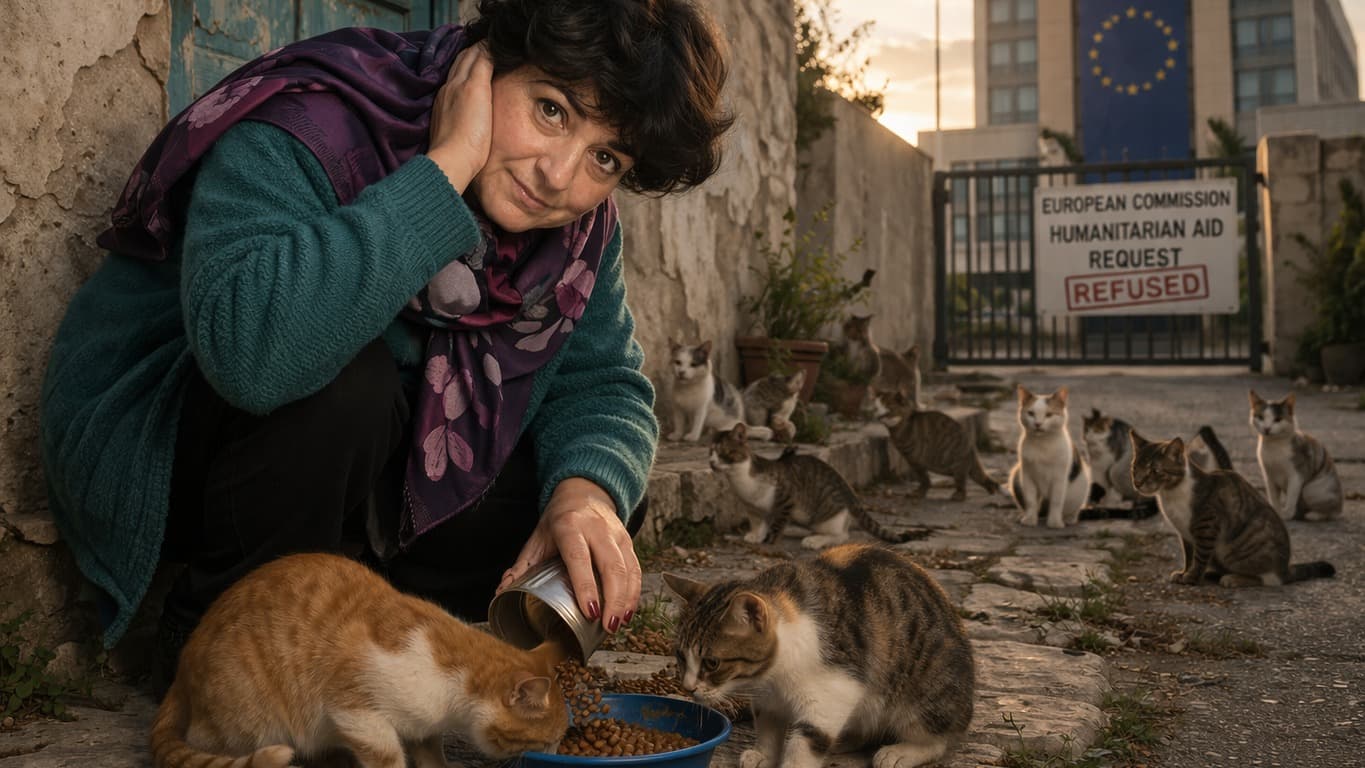
Cyprus has an estimated 1.5 million stray and feral cats. The island's human population is approximately 1.2 million. There are more homeless cats here than there are people.
This is not a statistic anyone disputes. The numbers are visible in every village, on every street corner, in every restaurant parking lot. Cats are everywhere in Cyprus, and the overwhelming majority of them are unowned, unsterilised, and surviving on scraps and the kindness of individuals who put out food bowls at their own expense.
When the Cyprus government sought support from the European Union to help manage this crisis, the response was clear: this is a domestic matter. The EU would not provide funding or assistance for stray animal management in Cyprus.
The cats of Cyprus were, in the eyes of Brussels, Cyprus's own problem.
The scale of the problem
To understand why Cyprus has so many stray cats, you need to understand a few intersecting factors.
Climate. Cyprus has a warm Mediterranean climate with mild winters. Unlike Northern Europe, where harsh winters naturally limit feral cat populations, Cyprus's climate allows cats to breed year-round. A single unsterilised female cat can produce two to three litters per year, with four to six kittens per litter. The maths compounds rapidly.
Culture. Outdoor cats have been part of Cypriot life for centuries. Many people feed strays but do not consider them their responsibility to sterilise. The cultural norm of community cats — fed by many, owned by none — means that population control falls through the cracks. Feeding a cat is an act of compassion. Paying EUR 50-80 to sterilise someone else's community cat is a harder ask.
Government capacity. Municipal animal management budgets in Cyprus are thin. The district veterinary services handle rabies vaccination programs and some stray management, but the resources allocated to Trap-Neuter-Return (TNR) programs are far below what the population requires. There is no national spay/neuter mandate for owned cats, and enforcement of existing animal welfare laws is inconsistent. For more on TNR limitations and systemic failures, see the stray cat crisis overview.
Abandonment. Cyprus has a significant expat population. When foreign residents leave the island — whether for work transfers, retirement moves, or simply because their circumstances change — some leave their cats behind. This is not unique to Cyprus, but the combination of a transient population and a warm climate creates a steady inflow of newly abandoned animals.
The 2023 catastrophe
In 2023, a devastating outbreak of feline infectious peritonitis swept through Cyprus, killing thousands of cats across the island. The virus is highly contagious and attacks immune function. In a population of unvaccinated, immunocompromised strays, it spreads like wildfire.
The outbreak made international headlines. Multiple major news outlets covered the mass die-off. Images of sick and dying cats filled social media. Rescue organisations that were already stretched beyond capacity found themselves overwhelmed by the scale of the crisis.
The government's response was widely criticised as slow and underfunded. Vaccination drives were eventually organised, but by then the virus had already killed an estimated 300,000 cats according to some reports — though the true number is impossible to verify because most stray cats die uncounted.
The FPV outbreak was not a one-time event. It was the predictable consequence of a massive unsterilised, unvaccinated population with no systematic management program. Without structural change, another outbreak is a matter of when, not if.
What the EU said
Cyprus, as an EU member state, is subject to European animal welfare regulations. The EU has frameworks for the welfare of farmed animals and animals used in scientific research. But stray animal management falls outside the scope of EU-level policy. It is classified as a matter of national or municipal governance.
When Cyprus sought EU funding or technical assistance for its stray cat crisis, the European Commission's position was that member states are responsible for managing their own stray animal populations. EU structural funds and cohesion funds, which can be used for environmental and social projects, have not been made available for stray animal management in Cyprus.
The reasoning from Brussels is legally consistent: the EU legislates on animal welfare in the context of agriculture, transport, and research, not urban stray populations. But the practical effect is that a small member state with limited resources and a crisis that has attracted international attention is left to solve the problem alone.
Who actually does the work
In the absence of government-scale intervention, the work of managing Cyprus's cat population falls to a patchwork of volunteer-run rescue organisations, sanctuaries, and individual feeders.
There are an estimated forty to sixty registered rescue organisations operating across Cyprus. Some are well-established with international supporter bases. Many are run by one or two people working out of their homes. Almost all of them are chronically underfunded.
These organisations run TNR programs, pulling cats off the streets, sterilising them, and returning them to their colonies. They foster kittens too young to survive on their own. They coordinate international adoptions to the UK, Germany, the Netherlands, and Scandinavia — a complex logistics operation involving veterinary preparation, EU pet passports, and commercial transport.
They do this with volunteer labour and personal funds. There is no government grant program for rescue organisations in Cyprus. There is no municipal budget line for TNR. Every sterilisation, every vaccination, every vet bill for an injured street cat is paid out of donations, fundraisers, and the personal savings of the people doing the work.
Gardens of St Gertrude, a cat sanctuary in Parekklisia, is one of these organisations. Since 2017, the founders have personally invested over EUR 460,000 in animal rescue across Cyprus — not only for the ninety-two cats in their own sanctuary, but paying veterinary bills for other rescue organisations who needed help with emergencies they could not cover. This is detailed in She Built a Tech Company to Feed 92 Cats.
Patch of Heaven Animal Haven in Limassol is another, caring for over one hundred cats and dogs with a constant need for food, litter, and veterinary care.
Multiply these two organisations by dozens, and you begin to see the hidden infrastructure that actually keeps Cyprus's stray population from spiralling further out of control.
A platform-shaped solution
Personal generosity has kept the rescue system running for years. But it cannot scale. The people funding rescue in Cyprus are burning through their savings. The volunteers are exhausted. The donations are unpredictable — a viral Facebook post brings a surge of support, then nothing for months.
What if the act of booking a dog walker generated funding for rescue automatically? What if every pet sitting booking, every overnight boarding stay, every dog walk along the Limassol promenade produced a small but reliable stream of money flowing to the organisations doing the actual work?
That is the idea behind Tinies. It is a pet services marketplace — owners book verified, reviewed providers for walking, sitting, and boarding — but ninety percent of every commission goes directly to animal rescue in Cyprus. Not as a marketing gimmick. As the structural purpose of the platform.
The EU will not fund this. The government has not funded this at the scale required. So the marketplace itself becomes the funding mechanism. Every transaction is a micro-donation. Every repeat booking is a recurring gift. Every new provider who joins the platform is another node in a network that channels commercial activity into rescue.
It is not enough to solve the crisis alone. But it is a model that scales with every new user, every new booking, every new provider. And it does not depend on the generosity of any single person or the political will of any institution. Learn more about the broader economics of stray cat care and how this model fits into larger solutions.
What you can do
If you are in Cyprus: Book a pet care provider through Tinies. Every booking generates funding for rescue. If you feed strays in your neighbourhood, contact a local rescue organisation about TNR — sterilising the cats you feed is the single most impactful thing you can do.
If you are in the UK or Europe: Consider adopting a rescue cat from Cyprus. Tinies coordinates the entire process. You give one cat a home, and you free a space in a rescue for another.
If you want to help directly: Become a Tinies Guardian and give monthly. Starting from EUR 3. Every cent goes to registered rescue organisations. No administration fee. Full transparency on the Tinies Giving page.
The EU said no. The people of Cyprus said fine — we will do it ourselves. They have been doing it for years. Now there is a platform to make that work sustainable.
Related posts
 RESCUE STORIES
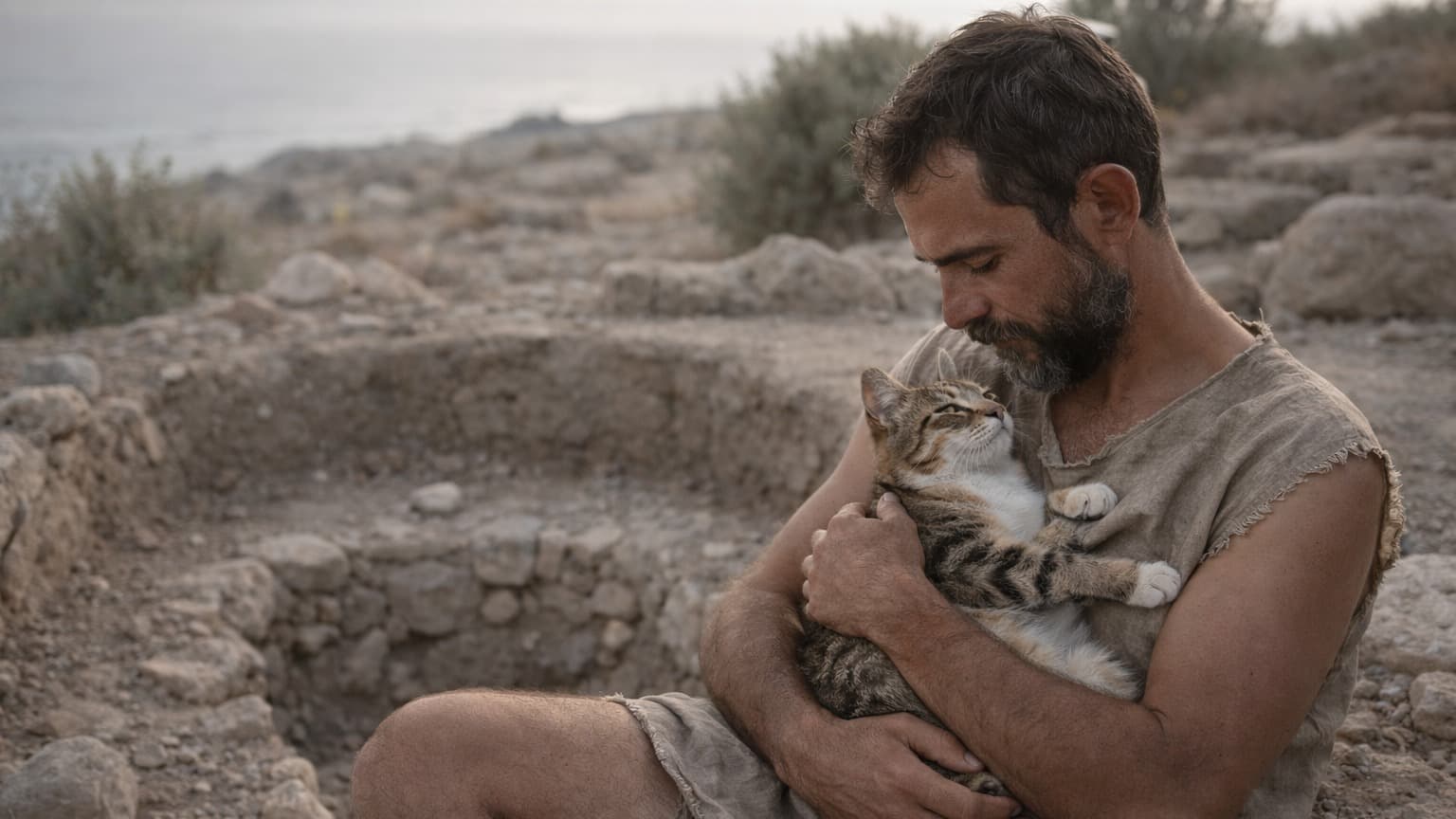
The Island Where Cats Were First Loved: A 9,500-Year History
The oldest evidence of the human-cat bond was found in Parekklisia, Cyprus — exactly where a cat sanctuary stands today. From Neolithic burials to …
7 min read
Read →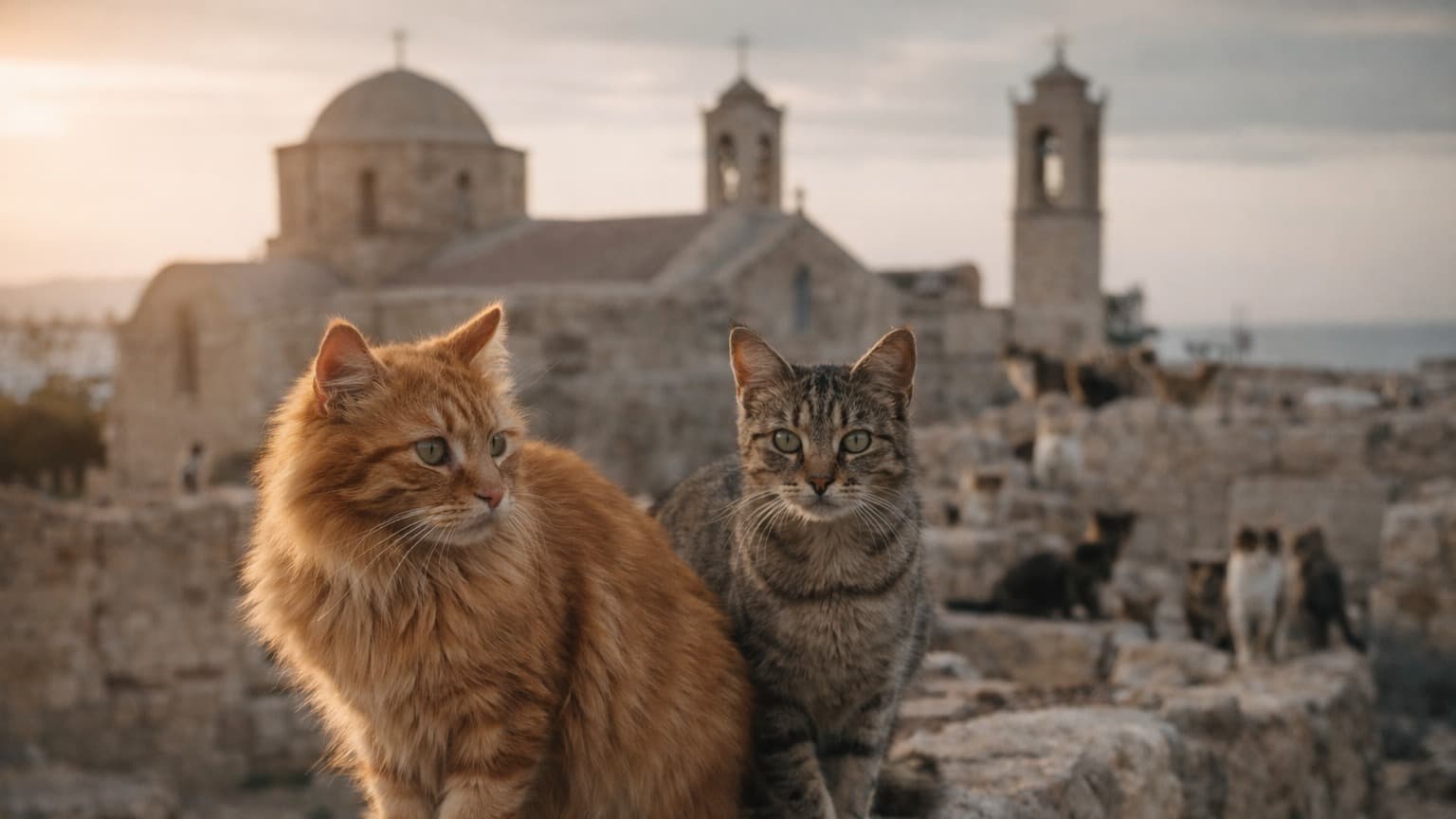 RESCUE STORIES
The Real Ecology of Cats in Cyprus: Invasive Species or Cultural Heritage?
Cyprus cats are simultaneously the island's oldest cultural companions and a pressure on its endemic wildlife. The solution is not extermination. I…
7 min read
Read → RESCUE STORIES
The Government of Cyprus Spends Almost Nothing on Stray Animals. Here's What Actually Happens.
Municipal budgets for stray management are thin. National policy is scattered. The real work — and the real cost — falls on volunteer rescue organi…
6 min read
Read →