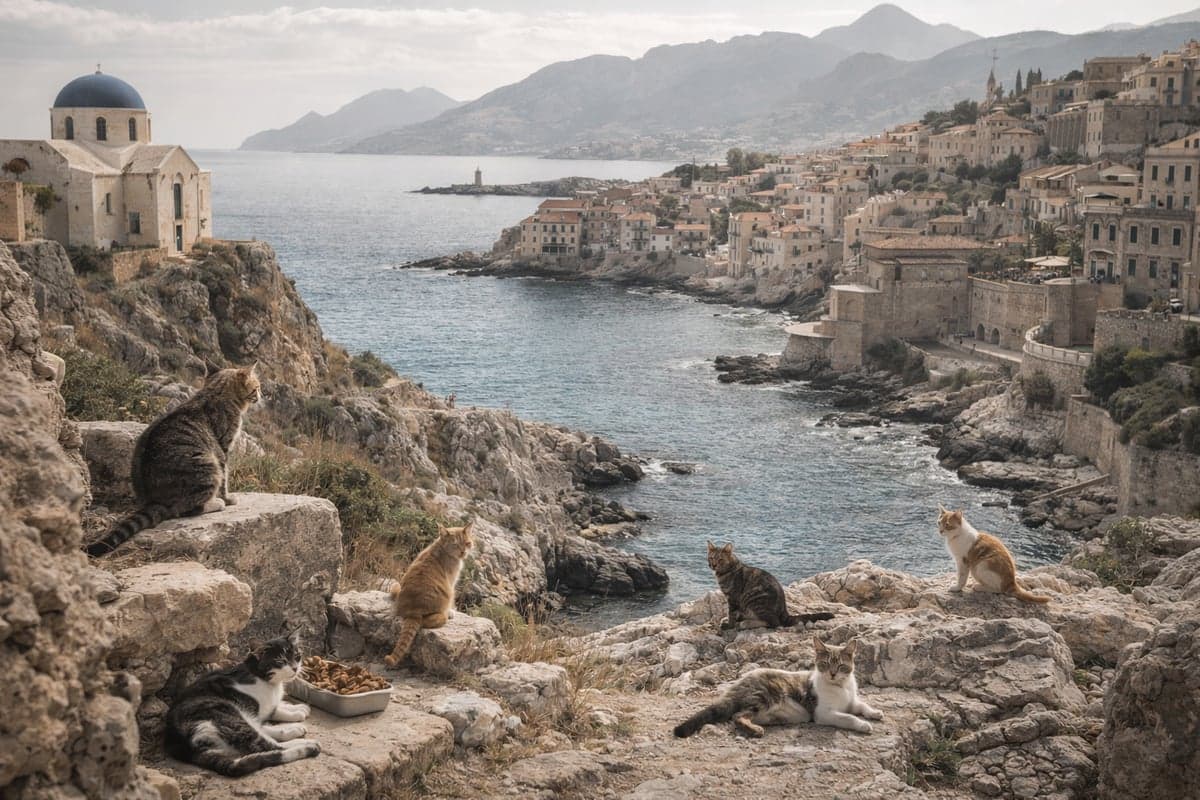
The Mediterranean stray cat crisis is not one crisis. It is the same crisis replicated across five countries, each making different decisions with different results. Comparing them reveals which approaches work, which fail, and which have never been tried.
We evaluated Cyprus, Malta, Greece, Italy, and Turkey across six dimensions: legal protection for strays, sterilization infrastructure, data and monitoring systems, waste management integration, community engagement, and measurable population outcomes.
Legal Protection
Italy leads by a wide margin. Law 281, passed in 1991, grants feral cats the legal right to live freely, mandates free public neutering, and institutionalizes colony caretakers. Rome went further in 2001, declaring cats at archaeological sites part of the city's biocultural heritage.
Turkey passed its Animal Welfare Act in 2004 and upgraded it in 2021 to classify animals as "living beings" rather than commodities, enabling prison sentences for cruelty. Turkey also maintains a blanket no-kill, no-capture policy.
Greece improved its legal framework after joining the EU in 1981, making it illegal to poison, harm, or neglect stray animals. Enforcement, however, remains inconsistent.
Malta and Cyprus have animal protection statutes but lack the specificity and enforceability of the Italian or Turkish frameworks. Neither country has legislation specifically addressing feral cat colonies, caretaker rights, or mandatory public sterilization.
Sterilization Infrastructure
Turkey is the clear leader in institutional capacity. The Istanbul Metropolitan Municipality employs 100 veterinarians and veterinary technicians dedicated to stray animal care. Mobile veterinary clinics rotate between neighborhoods. In 2018 alone, the municipality treated over 73,000 animals.
Italy provides free sterilization through public veterinary services as mandated by Law 281. The Torre Argentina Cat Sanctuary in Rome sterilizes 5,000 to 6,000 cats per year, supported by municipal infrastructure.
Greece relies almost entirely on NGOs and international charities. Nine Lives Greece sterilizes approximately 1,700 cats per year in Athens through volunteer labor. Animal Action Greece supports programs across the country but operates on grant funding.
Cyprus allocates €300,000 per year, sterilizing between 2,000 and 6,000 cats annually against a population of one million. There are no mobile clinics, no dedicated municipal veterinary staff, and no centralized coordination.
Malta allocates €200,000 per year. A previous tender for a national program received no bids. The current campaign operates through a single private veterinary clinic.
Data and Monitoring
None of the five countries has a comprehensive, real-time population monitoring system. This is arguably the most significant gap across the entire Mediterranean.
Italy comes closest through its colony registration system, which creates longitudinal records of registered colonies, caretaker assignments, and sterilization status. The 30-year study of Rome's colonies was possible only because of this data infrastructure.
Malta's new requirement that cat feeders register with local councils and create GPS-identifiable colony records is a promising step, but the system is in its infancy.
Turkey microchips sterilized animals and maintains veterinary treatment records, but lacks a unified national database for population monitoring.
Cyprus and Greece have no systematic data collection. Population estimates are rough, colony locations are unmapped, and sterilization coverage is unknown. (See our proposal for a Cyprus population dashboard.)
Waste Management Integration
No Mediterranean country has systematically addressed the relationship between waste management and cat population dynamics. This is the blind spot across the entire region.
Unsecured waste — open dumpsters, restaurant food waste, unsealed residential bins — provides the calorie base that sustains large stray populations. As we detailed in our piece on why the cat crisis will never be solved without fixing the bins, sterilization without food supply management produces populations that stabilize rather than decline.
Turkey has acknowledged the issue indirectly through designated feeding stations that concentrate food provision in monitored locations, reducing reliance on uncontrolled waste. But this is an additive measure rather than a waste reform measure.
Community Engagement
Turkey and Italy score highest. Istanbul's relationship with street cats is embedded in daily life, supported by cultural norms, religious values, and municipal infrastructure. Italy's gattare tradition formalizes volunteer caregiving within a legal framework.
Greece has a strong volunteer network, but it operates without institutional support. A 2024 systematic review found that the greatest population control outcomes occurred when community engagement — especially adoption programs and education — accompanied TNR. Greece's best results come from programs like the Kalymnos Cat Project, which combine TNR with community care.
Cyprus and Malta have dedicated volunteer communities, but these operate without legal recognition, institutional coordination, or municipal support.
Measurable Population Outcomes
Only Italy can demonstrate measurable population reduction at urban scale over a sustained period. Rome's 30-year data shows a 16 to 32 percent decline in managed colony sizes following consistent TNR. This is modest but real and documented.
Turkey's population appears stable in managed areas of Istanbul, but growing in peripheral neighborhoods and other cities. The data is insufficient to draw firm conclusions.
Greece demonstrates measurable results at island and bounded-area scale — 90 percent sterilization in refugee camps, significant colony reduction on Kalymnos — but not at urban or national scale.
Cyprus and Malta cannot demonstrate any measurable population outcome because they do not collect the data required to measure one.
The Composite Picture
Italy has the best legal framework and the only long-term population data. Turkey has the best institutional infrastructure. Greece has the best evidence for island-scale interventions. Malta has the geographic advantage of being small enough for national-scale coverage. Cyprus has the highest international visibility and the strongest economic incentive through tourism.
No single country has assembled all the necessary components. The country that does — combining Italy's legal framework, Turkey's institutional infrastructure, Greece's island-scale intensity, and Cyprus's tourism-funded economic model — will be the one that solves this.
That synthesis is what the Tinies model aims to build, starting in Cyprus and expanding across the Mediterranean.
Read more: Italy Gave Stray Cats Legal Rights in 1991, Istanbul's Community Cat Model, Malta Is Repeating Every Mistake Cyprus Made, and What Greece's Islands Teach Us.
For the Solutions Series: The Single Injection, Cat Tourism as a €100M Industry, Fix the Bins, National Feline Registry, Eradicate by District, and The Population Dashboard.
Tinies is a pet services marketplace where approximately 90 percent of booking commissions fund Gardens of St. Gertrude and other cat sanctuaries in Cyprus. Browse adoptable animals, find trusted pet care, or learn about our mission.
Related posts
 WHAT WORKS
What Greece's Islands Teach Us About Cat Population Management
Greece has 3 million stray cats and dogs. But on certain islands and in refugee camps, targeted TNR programs have achieved over 90 percent steriliz…
6 min read
Read →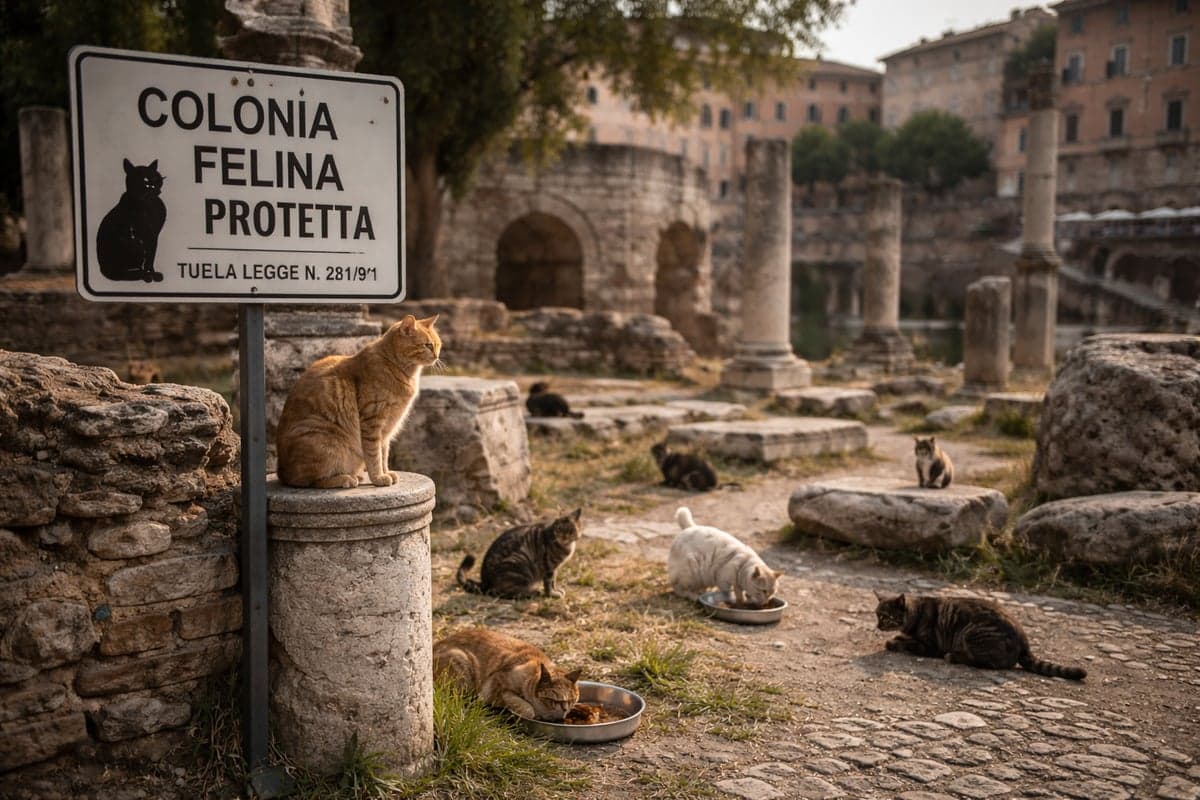 WHAT WORKS
Italy Gave Stray Cats Legal Rights in 1991. Here's What Cyprus Can Learn From It.
Italy's Law 281 grants feral cats the right to live freely, mandates free neutering by public veterinary services, and legally recognizes colony ca…
6 min read
Read →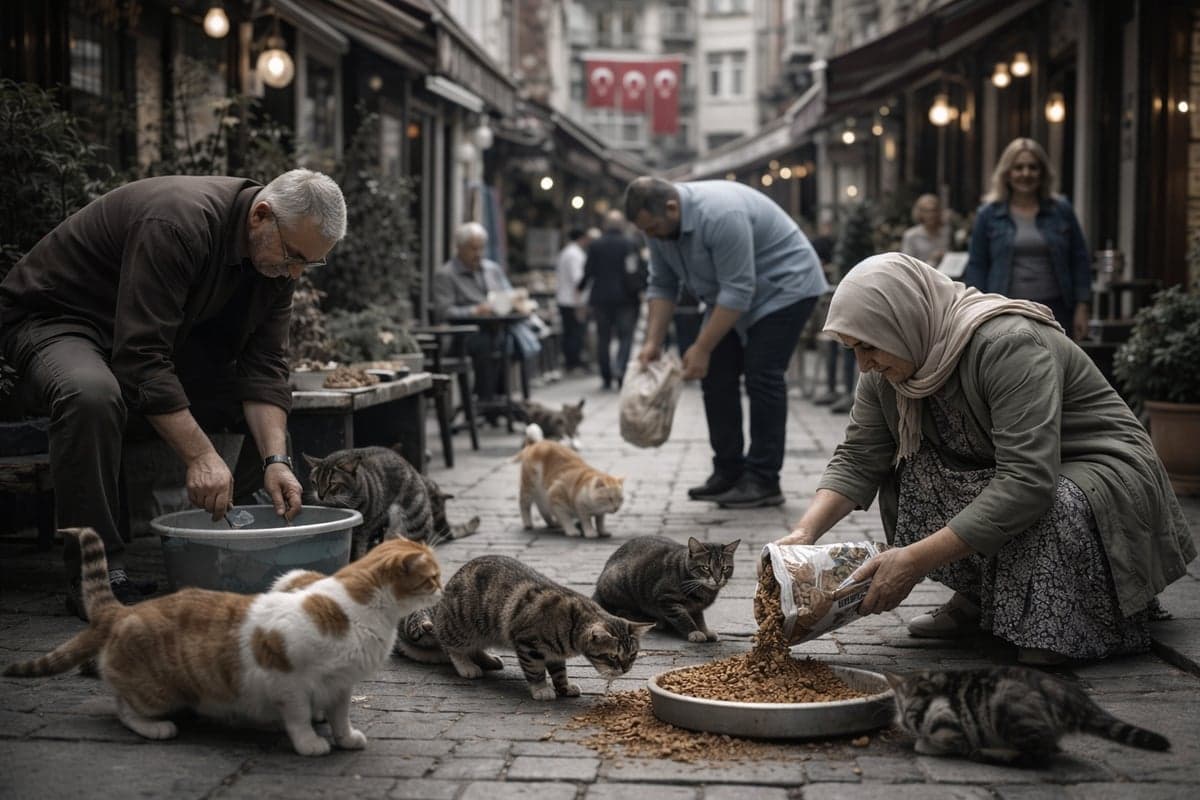 WHAT WORKS
Istanbul Treats Its Street Cats as Community Pets. Could Cyprus Do the Same?
Istanbul has over 125,000 street cats, a no-kill policy, municipal veterinary clinics, and a culture that treats strays as shared pets. But the mod…
6 min read
Read →