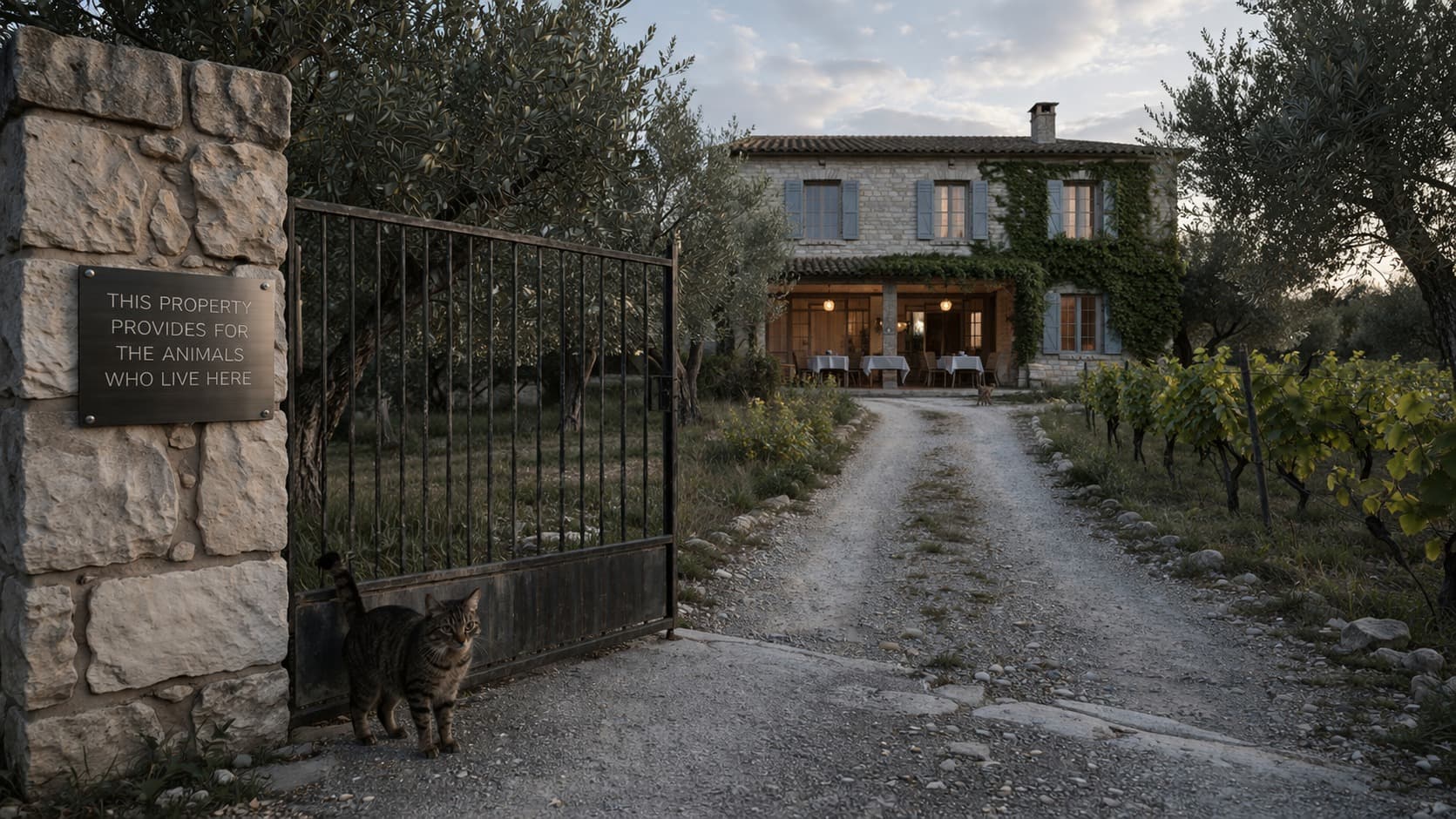
There is a useful thought experiment for anyone running a sanctuary or a rescue operation: drive past a busy commercial plaza and ask yourself whether a sanctuary could exist there. High foot traffic. Open access. Cars moving at speed. Strangers arriving and leaving all day. The answer is obviously no — and the contrast makes something clear that is easy to miss when you are deep in the daily work of animal care.
Not all properties are equal when it comes to keeping cats safe. And some of the properties that are safest for cats are also, for reasons that are not coincidental, viable businesses.
What makes a property structurally cat-safe
The features that protect cats are mostly the same features that define a certain kind of rural or agricultural property: walls, gates, enclosed outbuildings, slow-moving or absent through-traffic, and a working rhythm that does not involve large numbers of strangers arriving unpredictably.
A winery is the clearest example. Vineyards in Cyprus are typically gated rural properties with outbuildings, natural shelter in the vine rows, and vehicle movement that is slow and purposeful. The working calendar — harvests, bottling runs, tastings — does not conflict with the presence of resident animals. The clientele who visit for tastings have self-selected into an experience that values provenance, craft, and place. A cat asleep in a barrel room is not a liability. It is atmosphere.
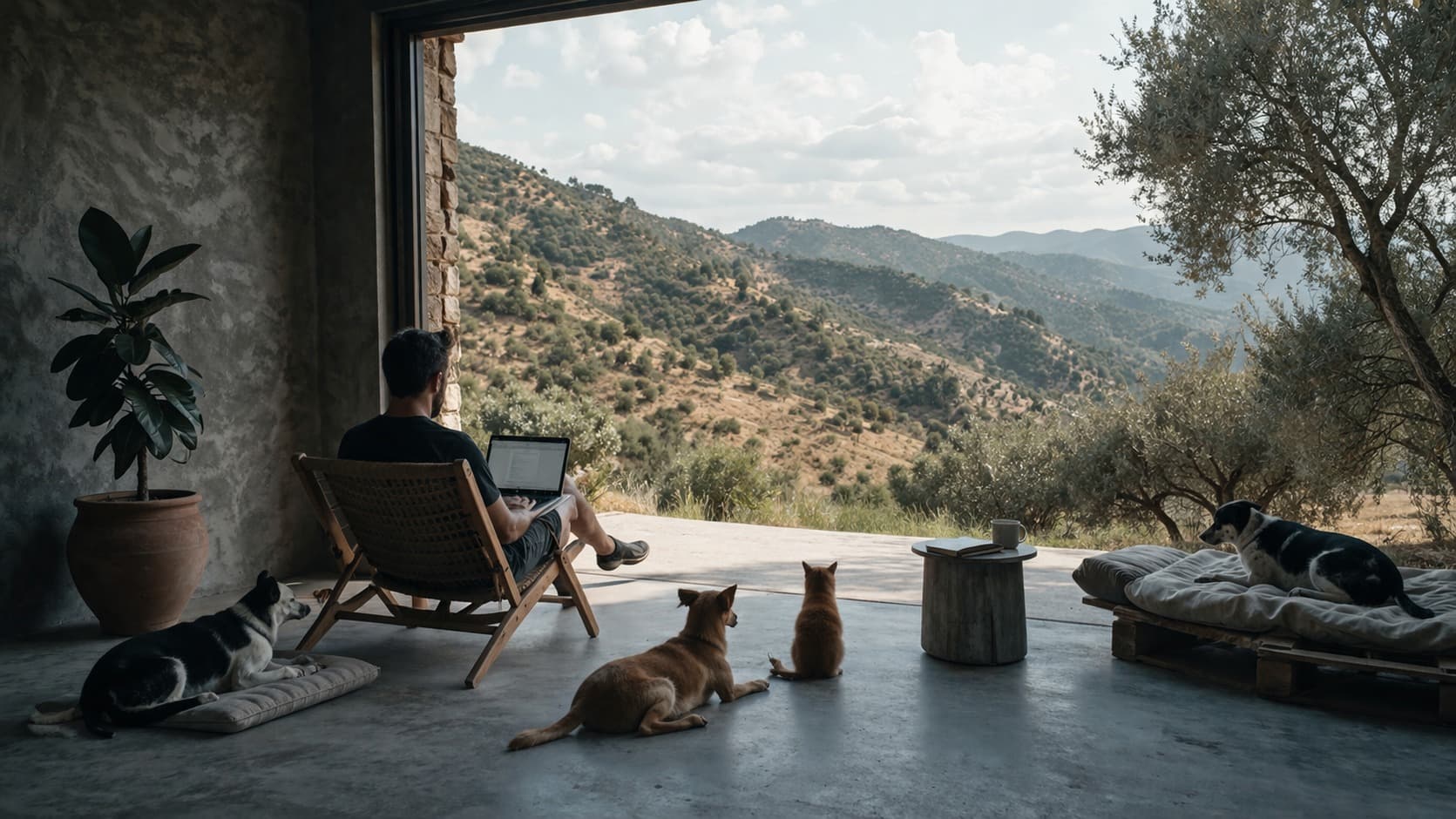
The same logic applies to olive groves and herb farms, where the land itself is the product and foot traffic is low and slow. To agrotourism guesthouses, where guests arrive intending to stay, not pass through, and where resident animals have long been part of the appeal. To small craft producers — a ceramics studio, a distillery, an apiary — that operate in compound-style spaces with natural enclosure. To retreat centers and residencies, where the demographic actively wants to be around living things.
The features that protect cats are mostly the same features that define a working rural property. This is not a coincidence.
What these properties share is not just physical safety. It is that the presence of resident cats becomes part of their identity. Guests remember the cat. They photograph it. They return because of it and tell others. Cyprus has already established a reputation as a place defined by its relationship with cats — a reputation that hospitality and agrotourism operators have barely begun to leverage. The ancient history of cats on the island adds depth to this positioning that no other Mediterranean location can offer.
What Cyprus has that most places don't
Cyprus has an unusual combination of features that make this more actionable than it sounds elsewhere.
The rural landscape — particularly the Troodos foothills, the Limassol hinterland, and parts of the Paphos district — contains a significant number of walled, enclosed agricultural and hospitality properties that are aging into transition. Families whose parents built a small vineyard or guesthouse are now deciding what comes next. Many of these properties have no obvious succession plan. The government's approach to rural development has been inconsistent, and the support infrastructure for new rural operators is thin.
This means distressed rural properties in Cyprus come to market at prices that reflect the difficulty of finding a motivated buyer — not the intrinsic value of the land, the buildings, or the established business identity. For a buyer who is also solving a sanctuary funding problem, that gap is an opportunity.
The Mediterranean context matters too. Countries that have handled their stray animal populations most effectively — Italy, parts of Greece — have done so through a combination of legal frameworks, community ownership of the problem, and operational infrastructure. Cyprus has the community ownership piece in abundance. What it lacks is the operational infrastructure. A network of cause-aligned rural properties is one version of what that infrastructure could look like.
The question this raises
If a winery is a structurally appropriate home for a sanctuary, and if that winery can generate enough revenue to cover operating costs — including the cost of caring for the animals — then the sanctuary stops being a drain on whoever is running it and starts being a feature of a viable business.
That reframe matters enormously. It changes who can run a sanctuary. It changes how long they can sustain it. It changes the conversation with a bank, with a partner, with anyone who needs to understand why this is a reasonable thing to invest in.
The real economics of what a sanctuary costs do not change. But where the money comes from changes completely.
The obvious next question is whether this is actually achievable — and what it would take to go from idea to operational property.
Next in this series: Taking over a dying business for the cats — the acquisition case, how rural Cyprus property works, and what a real transition from distressed business to funded sanctuary looks like.
Tinies is a pet services marketplace built to fund animal sanctuaries across Cyprus. Read how the model works.
Related posts
 SOLUTIONS
What If We're Thinking About This the Wrong Way?
The sanctuary funding model is broken. Not because people don't care — but because caring was never meant to be a business plan.
7 min read
Read → SOLUTIONS
The Cause Hotel: What I Pitched, What Y Combinator Said, and What I Think Now
I pitched a franchise model where hotels funded animal sanctuaries. Y Combinator passed. Here is what I built instead — and why I think the origina…
4 min read
Read →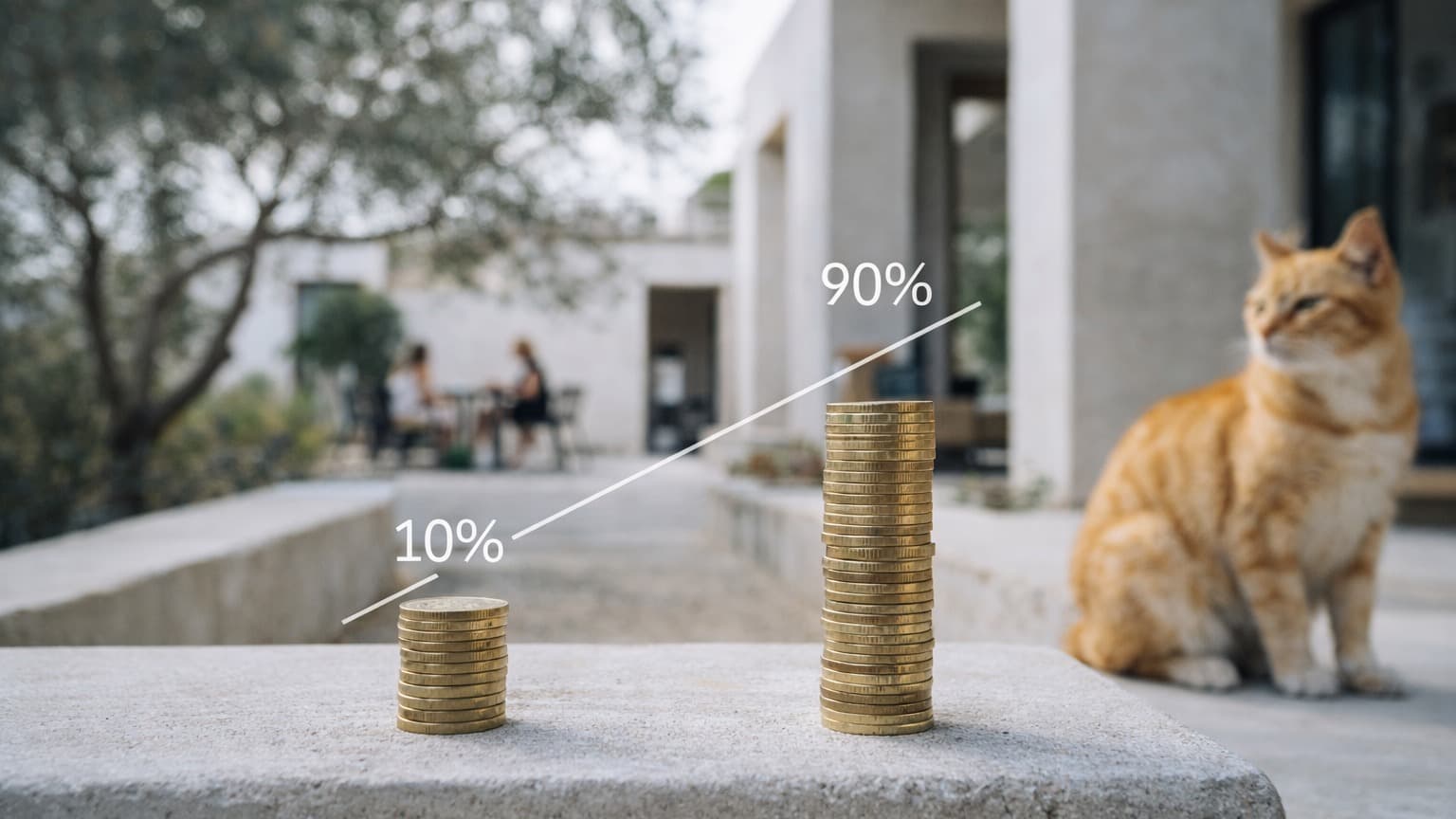 SOLUTIONS
The 90% Model: How to Structure a Business Where the Animals Are the Point
The mission is not funded by the business. The mission is what the business is for. Here is what that looks like in practice — and how to build it …
6 min read
Read →